Sometimes, I really agonize over what name I will give a character. Two factors are involved, especially in my historicals but it also counts for contemporary stories regionally; Is the name appropriate to the era, and for the country (England) or region in any contemporary novel set in the United States I might be writing about? And two, do I like this name that I will be living with throughout the whole series, however long that will be?
These factors are important. For the latter, I will be typing that name a million times, so giving them a long name isn’t exactly the best idea.
But for the former historical element of it, I have to research it. For the Middle Ages, names came from the Bible or from saints that came before. Or sometimes the current monarch. But the Middle Ages was a time period that lasted approximately 1,000 years (500 CE to 1500 CE), so the same name wouldn’t necessarily be appropriate when writing about the 1300s and using a name from the 600s. For instance, it’s all well and good to call someone Æthelbert when they live in seventh century England, but in the fourteenth century, that name would be decidedly out of fashion. You’d have to choose John, William, Richard, Robert, Henry, Thomas…names you’d pretty much be familiar with now. But on the flip side, if you wanted to use the name Tiffany for a woman, readers would assume you didn’t do your due diligence. But ”Tiffany” is a medieval name from the twelfth century. This is a problem for modern readers to encounter something this confusing, so it’s just best you don’t use it, even though it’s perfectly accurate.
When I chose ”Crispin” for my fourteenth century Medieval Noir series, I liked the way it looked in print, and it was the name of a saint appropriate for the era (and I was rather fond of the St Crispin’s Day speech in Shakespeare’s Henry V). Now as for his last name, I chose ”Guest”. Guest has Welsh roots so it’s an old name, and it was appropriate in several ways. For one, the character Crispin Guest was once a knight and lost it all because he chose his mentor John of Gaunt, Duke of Lancaster
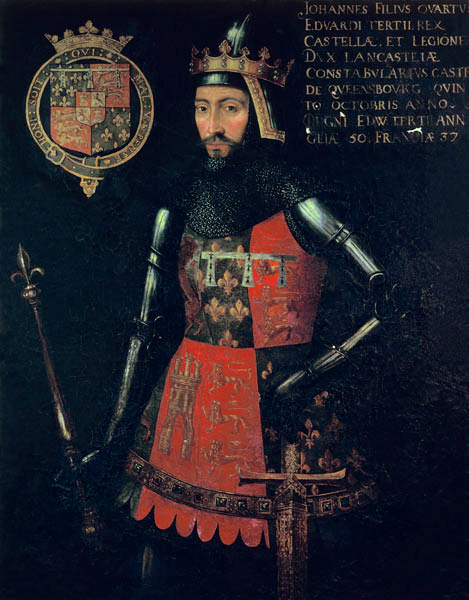
over the ten-year-old Richard II who was assuming the throne. As you can see by the picture below, it seems like no contest when it comes to swashbuckling kings. Alas, Gaunt believed in the line of succession, and he wasn’t in that line as long as his brother the Black Prince, Edward of Woodstock (in line for the throne but died before his father the king died, had a son).
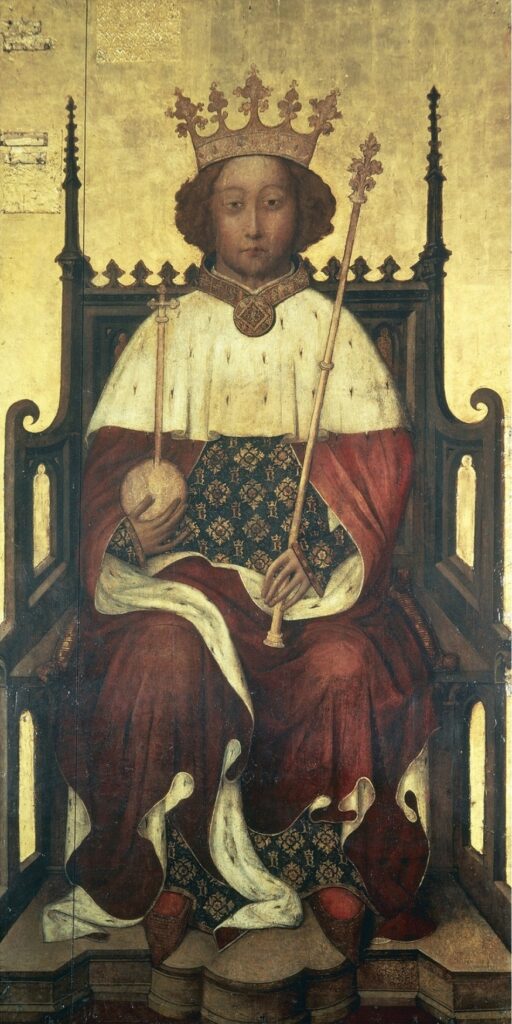
Crispin was charged with treason, losing his title, his lands, and everything else, and was saved from a horrible execution by Gaunt’s plea that he be spared, but banished from court and losing all that had defined him as a nobleman. This forced him into the life of a poor man on the streets of London, but to satisfy his intelligence and curiosity, not to mention his sense of chivalry, he chose the life of a man who finds lost things for a fee, the Tracker…and more often than not, murderers. His family motto is ”His Own Worst Enemy” which he was as a distant Welshman, since Wales was a conquered land by an English king, but also because of his personal choices. So his name is Guest, but he isn’t welcomed anywhere. See what I did there? It’s a loaded name, with layers of meaning for the readers (if they suss it out) and to him.
Now there are other names that just spring up naturally in my mind, because as soon as I type this character walking into the room, I have a name for them, because they’ve always had that name, it’s always been theirs through the magic of the Muse. Like ”Jack Tucker” in the same medieval series.
But most of the time, the Muse needs a little utz.
In my current Sherlockian series, Benjamin Watson was easy. I wanted my former Baker Street Irregular to work as a detective with his own ”Watson” just as his mentor Sherlock Holmes does. His biblical first name works for a black man of the Victorian era, which you have to research.
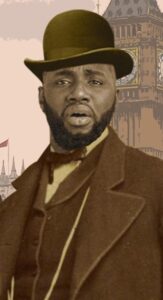
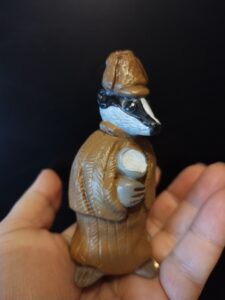
Now I had the first name Tim for my former Baker Street Irregular, because I like short first names for my protagonists, but the last name was stumping me for a Cockney bloke from the East End of London. I had on my list: Mayhew, Gamble, Davis, Turner, Parker (as a tribute to Lord Peter Wimsey), Carter, and Morgan. I didn’t like any of them. Until I came across a great Victorian surname of ”Badger”. Not that he was angry like a badger (an American one, that is. The British ones wear waistcoats and invite you to their burrows for tea), but because it sounded sufficiently low brow.
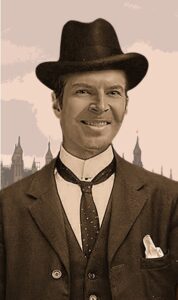
You aren’t going to find anyone named Lord Badger. And it looked good in print. Tim Badger. I love it, in fact. Plus it lent itself to a little giveaway item that I made, a Sherlockian Badger.
Even Sir Arthur Conan Doyle had trouble naming his deducing character. He at first called him Sherrinford Holmes. Then he probably decided he didn’t want to write that long name over and over, and harked back to his school days at Stonyhurst and recalled a fellow student named Patrick Sherlock, and the idea stuck. Thank goodness.
What’s in a name? All sorts of things. Look at what Dickens named his characters. They were descriptors of who they were; Scrooge, Pickwick, Fagan. So many more. Though one doesn’t want to be obvious about it. It may not even occur to readers the many layers you’ve put upon these characters just with their names, but it certainly adds something, another facet to consider for the writer.
And for the sharp reader as well.
Discover more from Jeri Westerson
Subscribe to get the latest posts sent to your email.