In my fourth King’s Fool Mysteries, DEVIL’S GAMBIT, Henry VIII weds his fourth wife, the German gentlewoman Anne of Cleves.
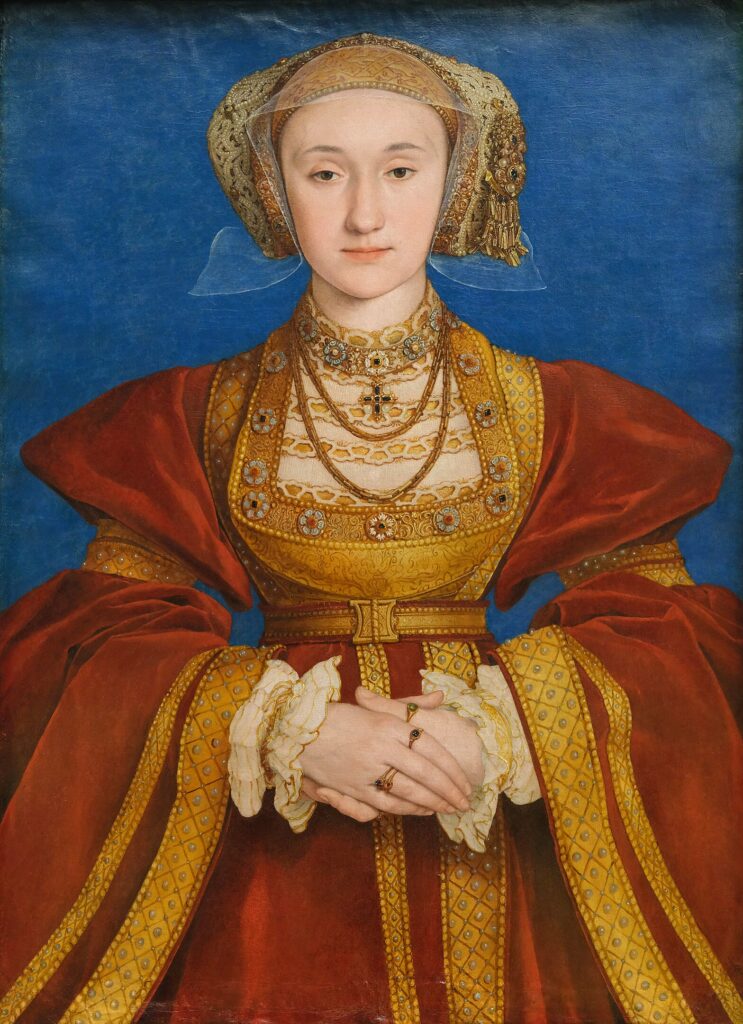
It would have been an arduous journey to come to England, meet the king to see if he liked her, to be accepted…or sent back in disgrace. Instead, Henry’s court painter, Hans Holbein the Younger, was sent to Germany to paint a portrait of Anne and her younger sister Amalia to see which the king preferred.
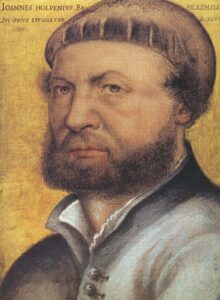
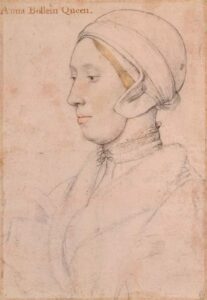
Hans Holbein was, in my opinion, one of the grandest artists to appear in the courts of Europe. His Swiss/German upbringing allowed him to learn painting and printmaking in the Northern European realistic style. We properly know exactly what Henry and some of his wives looked like because they were painted by the expert hand of Holbein (only a drawing remains of Holbein’s Anne Boleyn. We must speculate that there was a Holbein portrait because it is mentioned in documents, but we have to imagine that it was destroyed along with the sitter when Henry’s minions got Anne executed).
But let’s take a look at some of the details of his portrait of Anne of Cleves. The gentlewoman of Germany looks straight at the viewer/painter. He does not paint just her face, but a full scale look at the woman in her German finery. And what finery it is. Every soft highlight of her velvet gown…
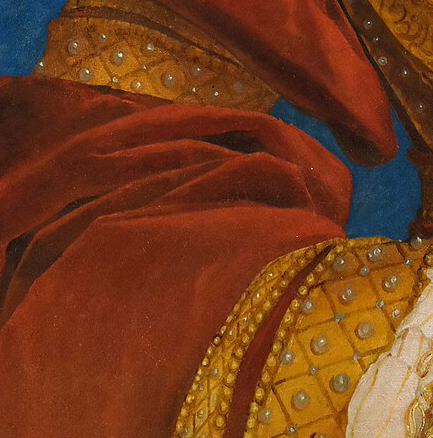
…every detail in the lace, the sparkle of the jewels…
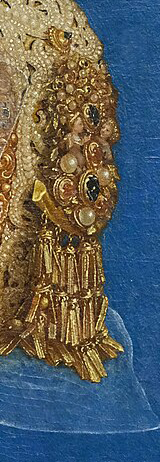
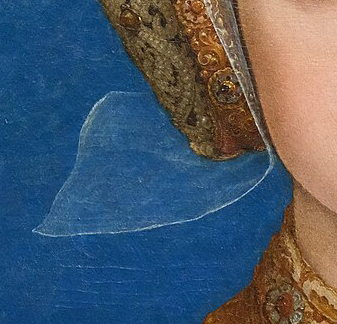
…the delicate and transparent veil of her headdress…
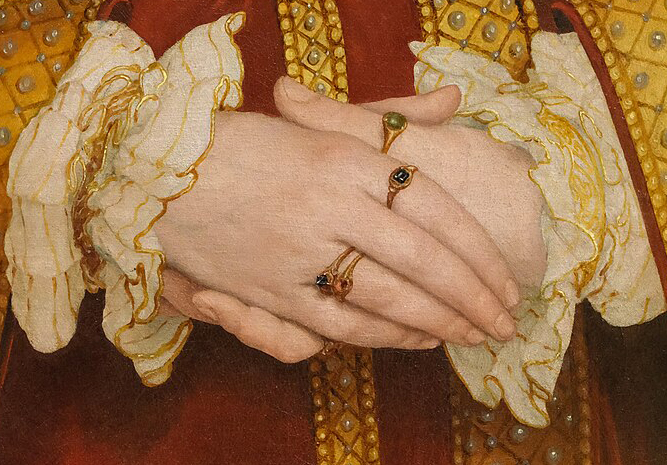
…the composed clasped hands with their rings. There is weight to that flesh. One imagines it is warm, and, dare I say plump. It isn’t flat paint, it is reality in a world long gone. The hands are relaxed. One might even hear the master’s voice telling the Lady Anne to loosen her grip, ‘Entspannen! Relax!’ You can almost touch that lace, its softness, the stiffness of the gold thread, the rings that are definitely on her fingers, not just a brustroke of paint.
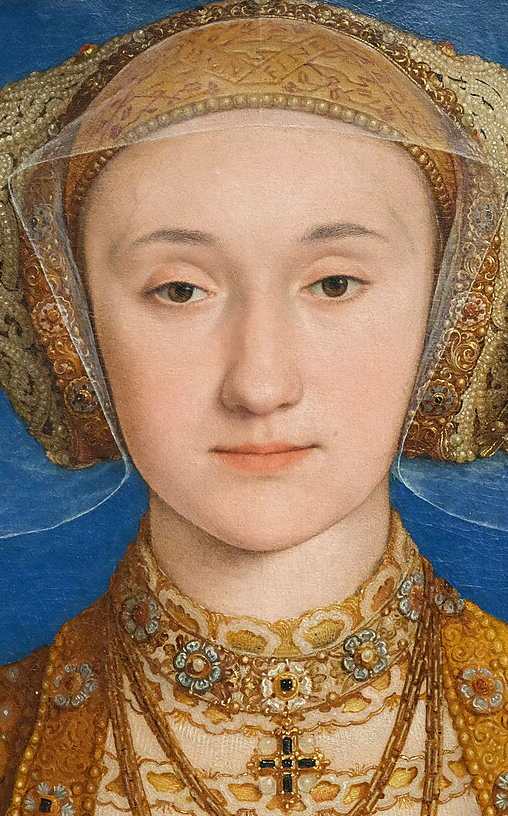
It shows an interesting face, even the delicate blue veins under the pale skin. A noble woman’s face, self-assured in her place in the world. Perhaps this is what enticed Henry, getting a real portrait of the lady.
Moreover, Holbein didn’t bother with details of a background. He had time constraints, to be sure, and had to get it done to send to Henry. It’s a decent size portrait, some 25.5 x 18.8 inches. Enough to see the detail of her face without straining, but not so unwieldy as a larger canvas.
But what the portrait couldn’t tell him was that she spoke no English, was not familiar at all with the intimacies of the marriage bed, and could not tell him whether he would truly like her or not. More’s the pity, for in my own research into her for the book, I found her to be a bit naïve but probably good housewife material, and able to meet Henry face to face to help run the kingdom. Alas. Henry was quite short-sighted and too impatient as far as this was concerned. He only liked English women from court, women that he knew. And Anne’s foreignness was too much for him.
But at least she came out of it well.
Art historian Ellis Waterhouse, says of Holbein’s portraiture that it “remains unsurpassed for sureness and economy of statement, penetration into character, and a combined richness and purity of style.” Indeed, when I was a young art student, I poured over Holbein to see brush strokes (only in the clothing), to understand his palette, and to understand how he saw the world. His portraits are full of symbolism with the knick-knacks you can see in many of them. For instance, the portrait painted in 1533, oil on oak, of Jean de Dinteville and Georges de Selve, known simply as “The Ambassadors”…
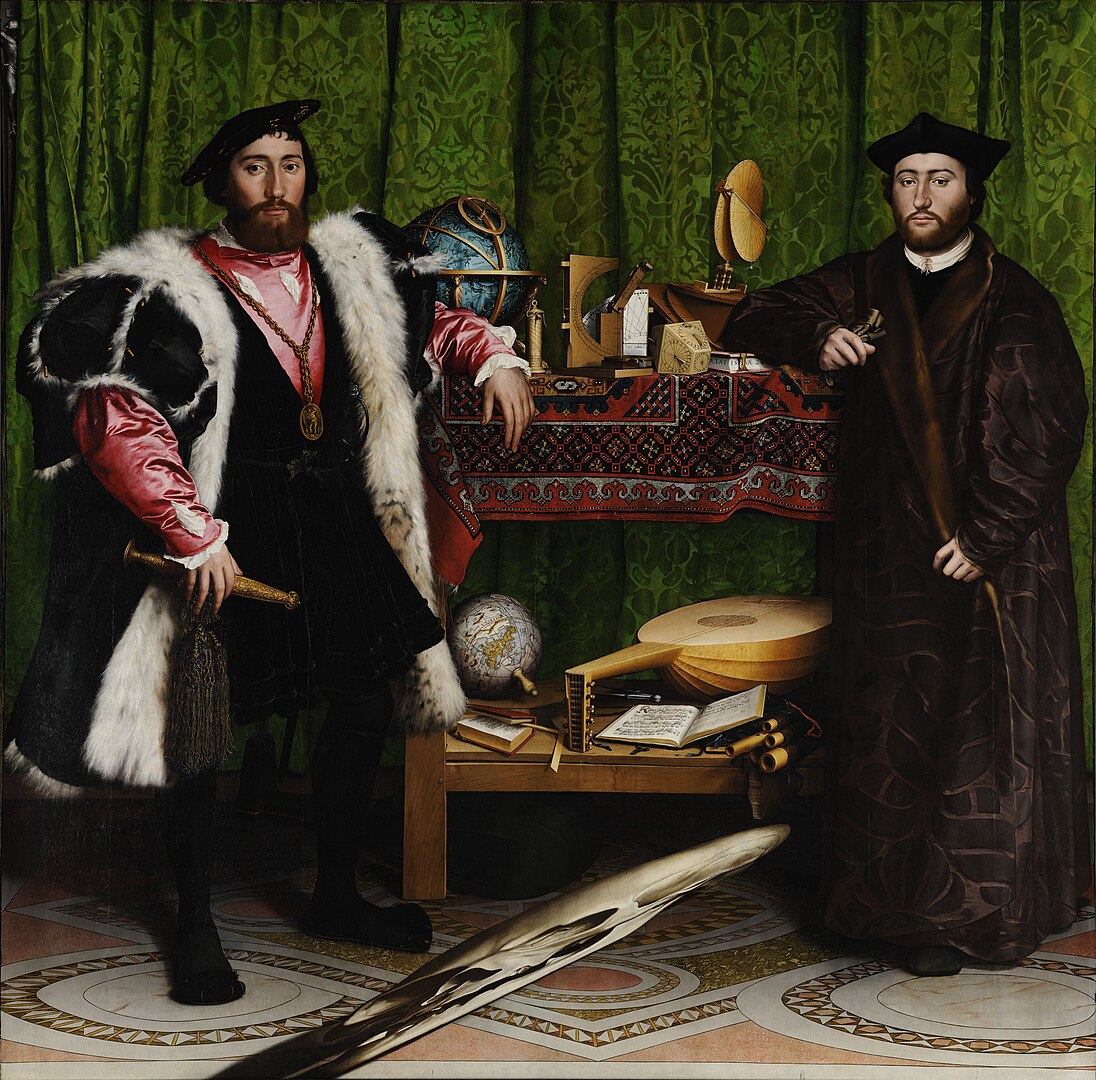
…is fraught with many symbolic items, including the odd addition of an “Anamorphosis”, that is, a distorted image that requires the viewer to take a specific vantage point. In this instance, to move the portrait flat and forward from the viewer to see the skull emerge. Or use a specialized lens in this example:
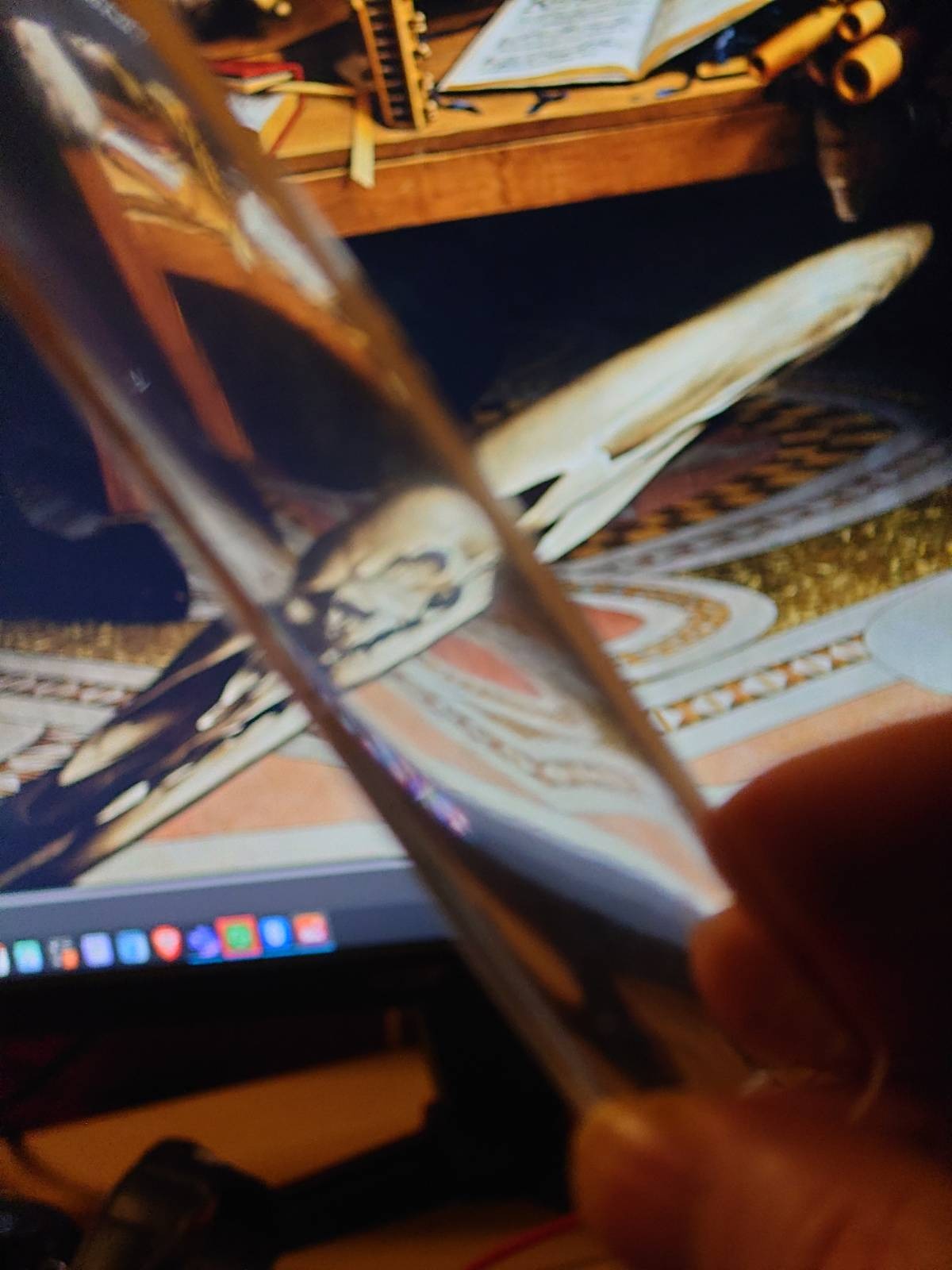
Was he editorializing on the accomplishments of these ambassadors? Did they usher in death wherever they went? Many of Holbein’s symbols in his paintings have been debated for centuries.
That portrait is in the National Gallery of London. However, the famous portrait of Anne of Cleves that grabbed the attention of a king, hangs in the Louvre in Paris.
Discover more from Jeri Westerson
Subscribe to get the latest posts sent to your email.
I’m so excited. I enjoyed every novel! Will it be available in eformat? How will I get it in Israel. I’m moving at the end of January. Whoohooo
It’s available on multiple platforms digitally, including Amazon, Draft2Digital, bookshop.org… Thanks so much for reading.