
Yes, the iconic fast food of fried and battered fish served with hot chips (or what we would call French fries) served wrapped in newspaper, is a symbol of Great Britain. It excluded from rationing during WWI and WWII as it was a universal favorite and in order to keep up morale it was given leeway as a nationalist point of pride.
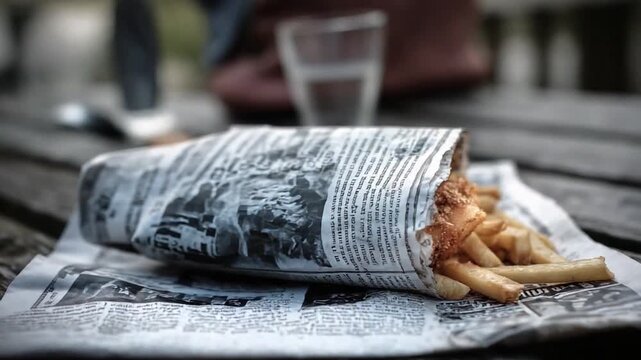
But this iconic cuisine — as with many favorite dishes in the UK as well as in America — was brought to you by…immigrants!
Yup. And it stemmed from the burgeoning development of the railway system. When the railways were spreading like arteries throughout England and Scotland, they were pretty simple…at first. Little more than coal cars for passengers to sit in, because that’s exactly what they were. But as it began to be viewed as absolutely necessary to interconnect regions, cities, and rural areas in England, carriages, by law, had to be covered to keep passengers out of the weather. But still, the early carriages were an enclosed system. In other words, they were a bit like cattle cars. You could not travel from one carriage to the other. The only way to do so was when the train was at full stop at stations. When they began putting aisles in train carriages where one could easily move not only from compartment to compartment, but from one carriage to another, you really had something (including toilets! A latecomer to rail travel. Can you imagine?).

But they still hadn’t solved the food situation. There were no dining cars. In the early stations, there were no refreshment rooms, and the ones they were beginning to create were definitely not wonderful cafes with digestible food. In 1867, for instance, Charles Dickens commented on railway-owned refreshment room fare; “The pork and veal pies, with their bumps of delusive promise and their little cubes of gristle and bad fat…the sawdusty sandwiches, so frequently and energetically condemned…” makes you shiver. Like today’s packaged gas station food. Gas station sushi, anyone?
So many brought their own food.
But enterprising immigrants saw an opening and wheeled their carts to platforms and created hot food, and fast! With a shot of malt vinegar and wrapped in newspaper, fish and chips was a modest but portable way to stave off hunger on long train rides.
These immigrants were Jews. Specifically, Sephardic, or Spanish and Portuguese Jews who had lived in the Netherlands (after being forced out of England in 1291 and all sorts of other regions in Europe at various times) before settling in the UK. Again. They began trickling back to England after 1656, still illegally, but were given a blind eye. It wasn’t until they began immigrating in numbers back to London during the 1850s, that the ancient law was finally dissolved in 1858. And like most immigrants, they set up shop. One of the foods allowed in a kosher diet was fish (had to have fins and scales, not shellfish) and it was also a favorite cheap meal for gentiles.
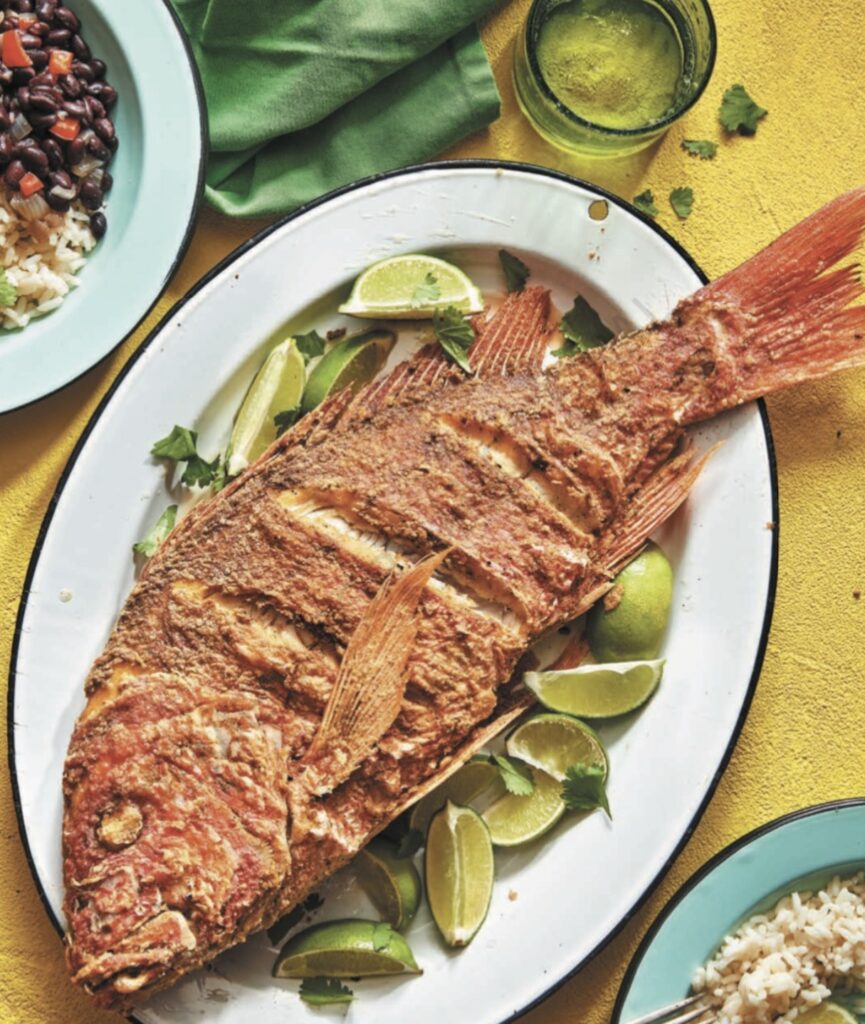
The fish dish that these Spanish and Portuguese Jews cooked was similar to pescado frito, floured or battered and fried fish. As you can see above, it was likely originally the whole fish. But a more economically deboned and cut-up fish was more practical and easier to give out to someone holding it in their hands. When the addition of chips happened is unknown but they did exist separately. Someone probably got the great idea to combine them, and working class fast food was born. Not that there wasn’t ”fast food” as such since the Middle Ages. Pork pies and pasties, anything encapsulated in baked dough was good traveling food. It kept to its own container, could easily be packed away in a satchel, and could be eaten warm or cold. But nothing seemed to meet such long-lasting success as the chippy (fish and chip shop).
Charles Dickens mentions “fried fish warehouses” in his 1838 Oliver Twist, and in 1845, the first edition of A Shilling Cookery for the People by Alexis Soyer offers a recipe for “fried fish, Jewish fashion.” It was making itself a permanent part of the English landscape. Right next to the good old traditional English dish, curry.
Discover more from Jeri Westerson
Subscribe to get the latest posts sent to your email.
The most iconic of English recipes and it turns out to be an import from Spain and Portugal! The most beautiful things can happen when cultures cross and blend, creating new things.
It is always true. They have forgotten that. But they don’t even notice that curry is also from immigrants/ a former colony. They consider it British, just as we have celebrated our love of tacos but, sadly, not to the people who brought them to us.