
Sometimes you come across something that peaks your interest. And the bobbin hat is certainly one of them.
I was watching an episode of BBC’s The Repair Shop in which everyday British people bring in family heirlooms that are treasured by them; a metal toy car from when they were a kid, a doll received when a small child, a treasured painting, and — in this case — a grandad’s bobbin hat; all repaired for free!
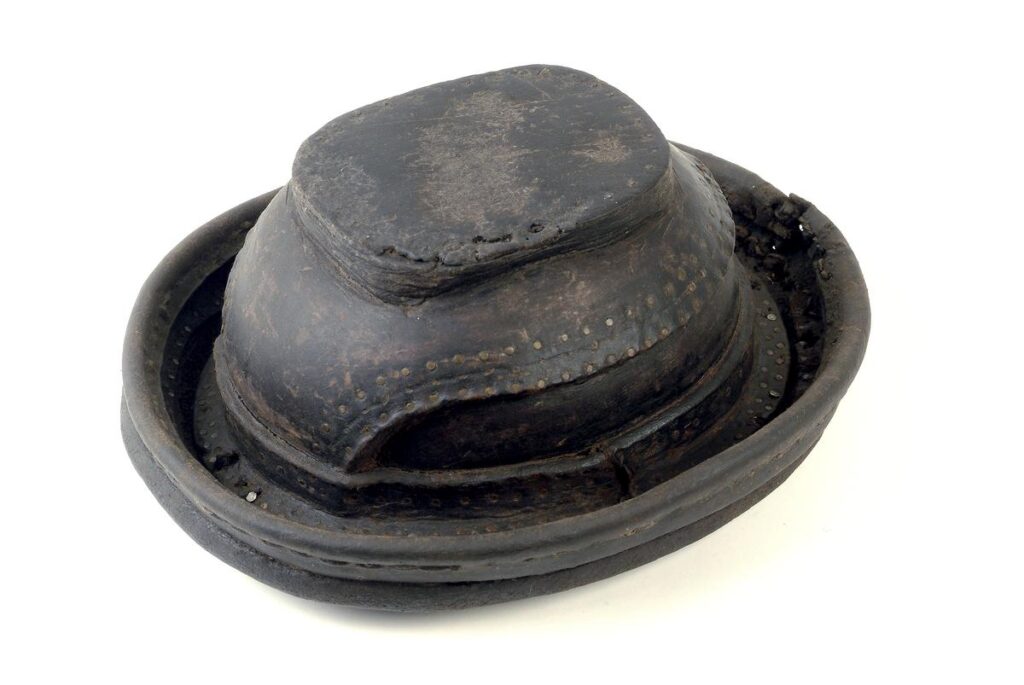
The photo above is from the British Museum. These hats were once prolific at the Billingsgate Fish Market in London, from 1852 to the 1950s, but the market was relocated to Poplar in 1982.
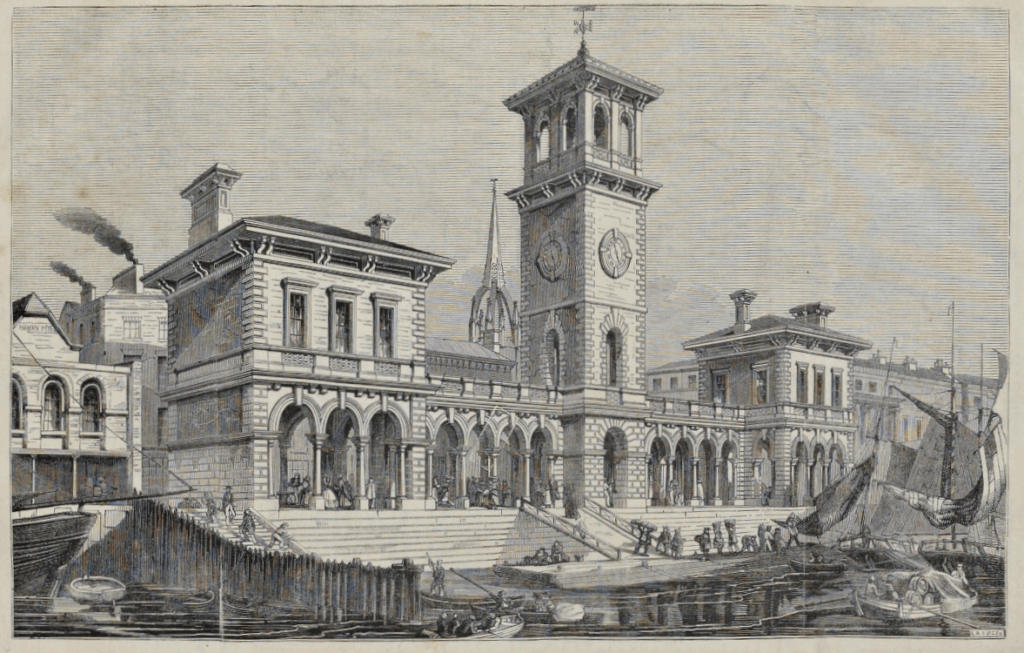
The hats were designed for men working as porters in the market (above, 1852) and delivering crates of fish to ships, hotels, and private homes and carrying them on their heads. The hats are a one-of-a-kind item. It took five pounds of leather (that’s weight not money), 6 yards worth of waxed string for sewing, and 400 nails. Yes, that’s heavy on your head, but so is a crate of fish and ice! Crafted over a wooden form, the leather is layered and sturdy, and the top crown that actually holds the crate is three layers of leather. It was once thought that after construction, they were tarred to protect them from the weather, and some might have been, but mostly, they were simply oiled again and again and the years of dirt simply made them darker. They would last generations, and often passed down to sons who would also work in the fish markets.
Here is a Pathe film of a cordwainer, someone who traditionally made shoes, creating, in a dying art, the bobbin hat (so called, it was believed, because of the bob tip [British shilling coin, worth 12 pence in those days] they received when delivering).

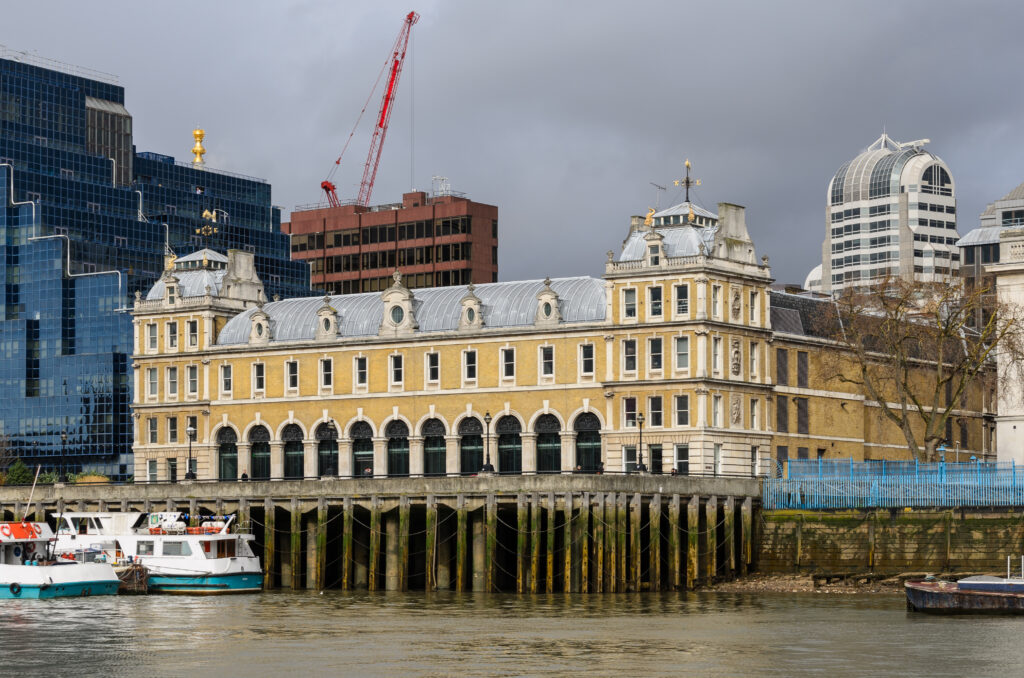
Above is the 1870s market at Billingsgate London.
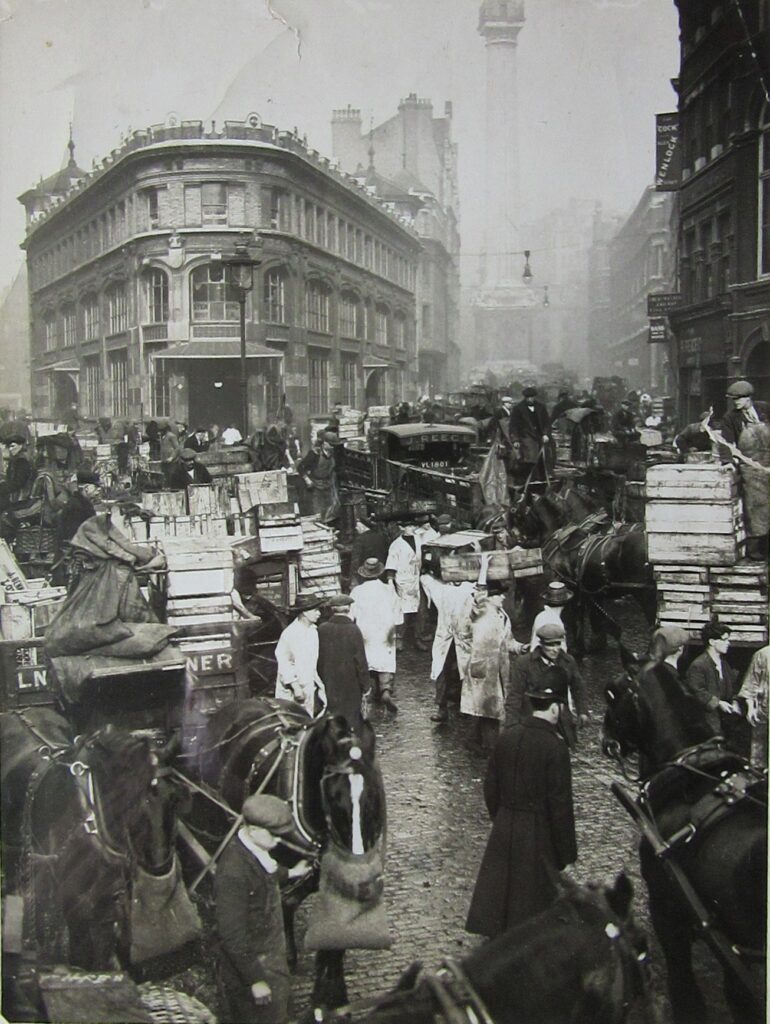
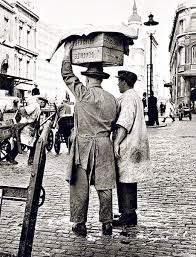
Above is the Billingsgate Market, date uncertain. It could be Victorian, but it could also easily be the 1930s, where horse-drawn conveyances were still in use (the lights strung across the street make me think it is the latter date). The absolute crowded nature of it all would make using carts or dollies unusable. Having the package on your head still made the most sense. You can see various porters in their white coats wearing those very heavy hats.
The episode where the leather expert Suze Fletcher, fixed the worn and tattered hat, shows her removing the brim of the hat to repair and replace some of the nails, and giving it an overall spruce up. You can watch that here, starting at 6:21.
Discover more from Jeri Westerson
Subscribe to get the latest posts sent to your email.
The Electric Lamps in Billingsgate. They “throw a glare on the fish,” and are unfavourable to the complexions of the fish-salesmen, who, under this uncompromising illuminating power, might be detected in blushing for the manoeuvres of the fish-ring, and the extortionate retail prices charged by the fishmongers.
Punch, February 8, 1879
Ha ha. Punch didn’t, er, pull it’s punches, did it.
A tough hat for a tough job! I remember reading somewhere that the bowler hat was also favored by policemen of the Victorian era because of how well it protected the head from blows. I was shocked since I always assumed it was just a fashion.
Hmm. I haven’t heard that. Since they are just ordinary felt hats, I don’t think they’d offer any particular protection. The constables, of course, wore the tall custodian hats that do offer some protection (the bobbies).