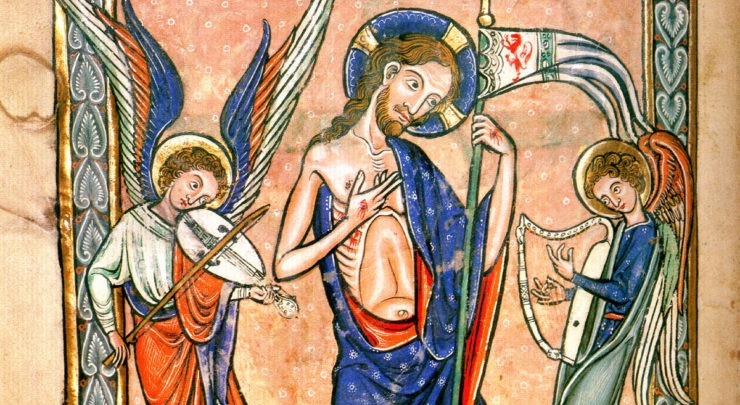
The week before April 5th this year is Passion Week and that is the last stretches of the Triduum, the three days prior to the Feast of the Resurrection or Easter, which includes Holy Thursday, commemorating the institution of the Eucharist; Good Friday, the day Jesus died; and Saturday, the Easter Vigil, the mass where catechumens are initiated into the Church and Easter is awaited. Lent ends on Holy Thursday but these three days are still a solemn celebration.
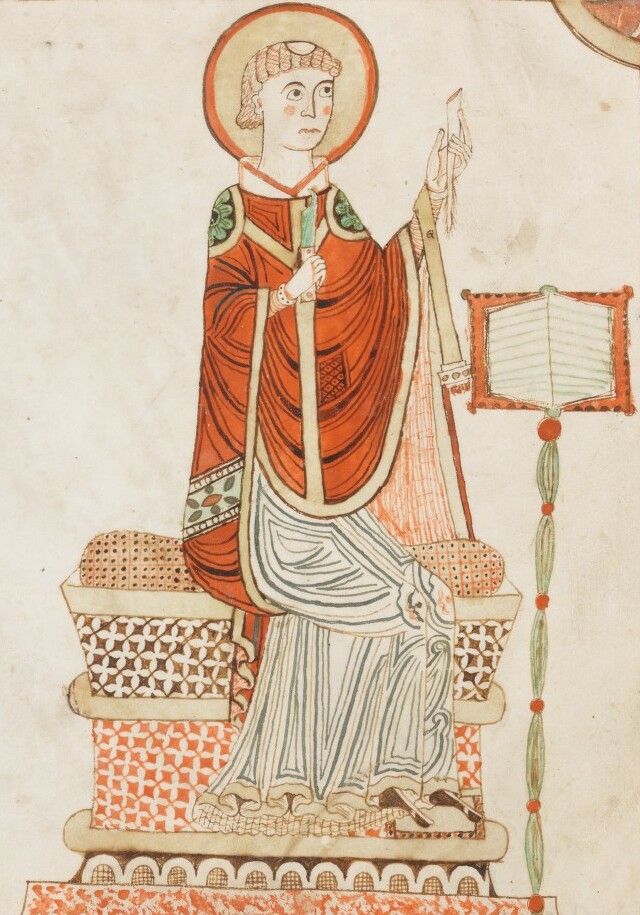
Easter. The Venerable Bede, an English saint and historian of the 8th century, tells us that the term comes from a Teutonic goddess of dawn and spring. (Bede below)
However, the Greeks used pascha, originally having nothing to do with the verb paschein, “to suffer,” but later writers preferred the symbolic association anyway, when in fact, it comes from the Aramaic dialect of the Hebrew pesach which means Passover, the Jewish holiday commemorating the deliverance from slavery in Egypt. Jesus made much of that when he explained the Eucharist at the Passover Seder with his Apostles (Jesus symbolically associated himself as the new Moses, delivering the people not from an earthly bondage but from a sinful one; he is the manna from heaven, etc.)
Want to know how to calculate when Easter is? According to the Roman Catholic Church, Easter falls on the first Sunday following the first full moon that occurs on or after the vernal equinox, which is the 14th day of a tabular lunation (new moon). Got it? But in the 4th century, Emperor Constantine wanted to make sure that Easter was a separate holy day from anything Jewish (God forbid that the Jewish Savior have anything relating to his own faith. And I include a big chunk of it just so you get the whole feel for the time period):
When the question relative to the sacred festival of Easter arose, it was universally thought that it would be convenient that all should keep the feast on one day; for what could be more beautiful and more desirable, than to see this festival, through which we receive the hope of immortality, celebrated by all with one accord, and in the same manner? It was declared to be particularly unworthy for this, the holiest of all festivals, to follow the custom [the calculation] of the Jews, who had soiled their hands with the most fearful of crimes, and whose minds were blinded. In rejecting their custom, (1) we may transmit to our descendants the legitimate mode of celebrating Easter, which we have observed from the time of the Saviour’s Passion to the present day [according to the day of the week]. We ought not, therefore, to have anything in common with the Jews, for the Saviour has shown us another way; our worship follows a more legitimate and more convenient course (the order of the days of the week); and consequently, in unanimously adopting this mode, we desire, dearest brethren, to separate ourselves from the detestable company of the Jews, for it is truly shameful for us to hear them boast that without their direction we could not keep this feast. How can they be in the right, they who, after the death of the Saviour, have no longer been led by reason but by wild violence, as their delusion may urge them? They do not possess the truth in this Easter question; for, in their blindness and repugnance to all improvements, they frequently celebrate two passovers in the same year. We could not imitate those who are openly in error. How, then, could we follow these Jews, who are most certainly blinded by error? for to celebrate the passover twice in one year is totally inadmissible. But even if this were not so, it would still be your duty not to tarnish your soul by communications with such wicked people [the Jews]. Besides, consider well, that in such an important matter, and on a subject of such great solemnity, there ought not to be any division. Our Saviour has left us only one festal day of our redemption, that is to say, of his holy passion, and he desired [to establish] only one Catholic Church. Think, then, how unseemly it is, that on the same day some should be fasting whilst others are seated at a banquet; and that after Easter, some should be rejoicing at feasts, whilst others are still observing a strict fast. For this reason, a Divine Providence wills that this custom should be rectified and regulated in a uniform way; and everyone, I hope, will agree upon this point. As, on the one hand, it is our duty not to have anything in common with the murderers of our Lord; and as, on the other, the custom now followed by the Churches of the West, of the South, and of the North, and by some of those of the East, is the most acceptable, it has appeared good to all; and I have been guarantee for your consent, that you would accept it with joy, as it is followed at Rome, in Africa, in all Italy, Egypt, Spain, Gaul, Britain, Libya, in all Achaia, and in the dioceses of Asia, of Pontus, and Cilicia. You should consider not only that the number of churches in these provinces make a majority, but also that it is right to demand what our reason approves, and that we should have nothing in common with the Jews. To sum up in few words: By the unanimous judgment of all, it has been decided that the most holy festival of Easter should be everywhere celebrated on one and the same day, and it is not seemly that in so holy a thing there should be any division. As this is the state of the case, accept joyfully the divine favour, and this truly divine command; for all which takes place in assemblies of the bishops ought to be regarded as proceeding from the will of God. Make known to your brethren what has been decreed, keep this most holy day according to the prescribed mode; we can thus celebrate this holy Easter day at the same time, if it is granted me, as I desire, to unite myself with you; we can rejoice together, seeing that the divine power has made use of our instrumentality for destroying the evil designs of the devil, and thus causing faith, peace, and unity to flourish amongst us. May God graciously protect you, my beloved brethren.
Except, of course, by about 1000 CE, there was the Great Schism and we have a Western Roman Church and the Eastern Orthodox, who celebrate Easter on different days. So take that, Constantine!
And for the record, Jews did celebrate a “second Passover,” known as Pesach Sheni (Second Passover) 30 days after the main Passover as established in Numbers 9:1–14. It was originally created as a second opportunity for those who were ritually impure or on a journey during the first Passover to offer the sacrifice. Most of us don’t do that anymore.
But since Easter follows on right AFTER Passover as Jesus celebrated it, it makes sense to time it AFTER the Jewish Passover, whenever that falls. Hence, Easter falls on the first Sunday following the first full moon that occurs on or after the vernal equinox, which is the 14th day of a new moon…because that’s basically when Jews celebrate the week of Passover.
Eggs as a symbol of spring and renewal have been around a long time. Hebrews used the egg as well as doves and lambs as temple offerings, which is why the egg (and lamb bone) are two of the symbols on the Passover Seder plate.
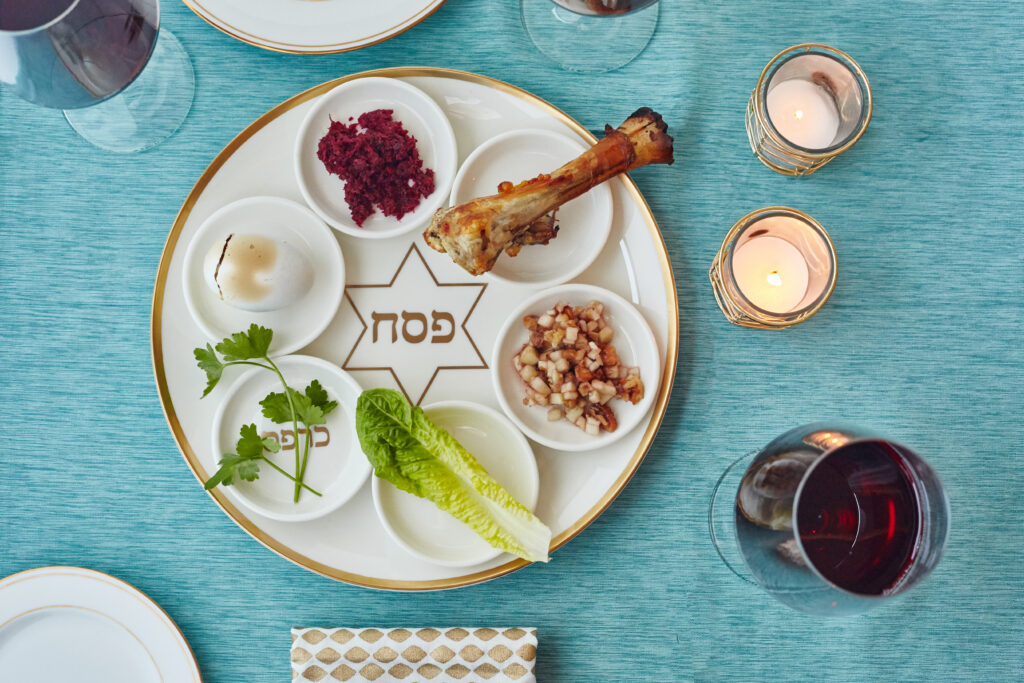
The egg was later adopted by Christians as a resurrection symbol of a tomb with new life emerging. On medieval tables, eggs were left off of the menu during Lent and preserved for the Easter season (fifty days following Easter up to Pentecost—oops. Pentecost or Shavuoth is also a Jewish festival celebrating when Moses received the Law from God.
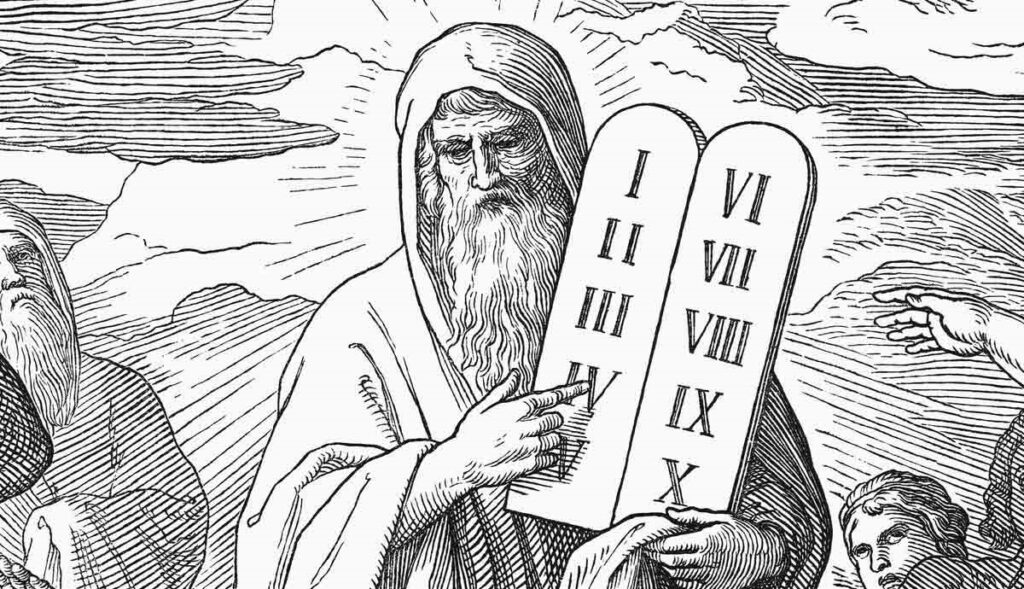
Following those pesky Jews again. Can’t escape it, apparently. Well, they tried, because Christians absconded with the holiday and now celebrate it as the descent of the Holy Spirit on Jesus’ disciples after his Ascension, held on the seventh Sunday after Easter. Maybe they should be paying royalties or something.)
During the Middle Ages came the emergence of the Passion Play, sort of the first theatrical performances done by the laity, post Christian era before this re-evolved into theatre as we know it…
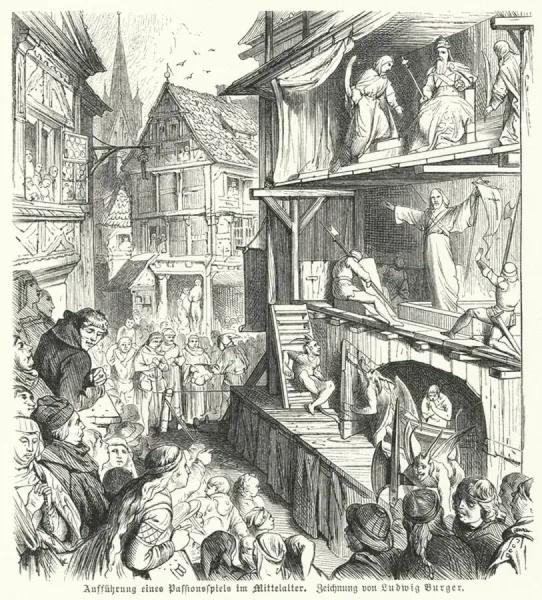
The Greeks had theatre as we know it, but after Christianity took over, these sorts of things—heroic epics, love stories, strong women—were looked on as pagan and not to be emulated. Performing religious plays about Jesus and other biblical persons and events were acceptable, though they got more and more elaborate as time went on.
Medieval Passion Plays are still performed in Europe, the most famous of which is the one performed in Oberammergau, Germany, though it’s first performance was in 1633, taking it decidedly out of the medieval era but with the spirit of medieval versions. Plagues, the Hundred Years War, all caused a great deal of suffering. The community vowed to perform the Passion of Jesus every ten years in thankfulness of their survival in all this suffering and they have done so. It has not been without controversy, however. They struggled in the last few decades under an anti-Semitic stigma (Anti-Semitic? Germany?) and many Jews and Christians alike in the modern era called for it to be pulled or at least revamped. Eventually, it was reworked though the anti-Semitic overtones of the passion itself are hard to overlook. Jews do come off as the bad guys. Though from the Jews’ point of view, here is yet another prophet (Jesus) who wants to reform Judaism and has the temerity to claim divinity or at least not to deny it when his associates claim it. That’s big Blasphemy, and if there is anything the Jews are good at, it’s keeping the Law. So let’s be a little less harsh of Jews in this, okay? Anyway, the Catholic Church falls all over itself these days denying Constantine’s diatribe, and even as the Passion is read at mass, they explain — in very strong terms — that the Jews must not be considered the bad guys. Let’s put blame on the Romans where it belongs.
Easter as celebrated in the Middle Ages was as solemn as one might expect. It was far more important than Christmas. Life followed the Church cycles. Feast days were celebrated, well…religiously. This was entertainment, community, something fun after the dreariness of winter. You got days off of work! Very important. And even though there was a distinction in classes, everyone celebrated the same thing at mostly the same time. And as always, processions were a big part of the community event. After the Easter season ends with Pentecost, we are back to the liturgical calendar’s “ordinary time”, where only the occasional feast day (usually a saint’s death day) pops up to stave off the boredom of spring, summer, and early fall (though there were regional/cultural events to celebrate those times, like a pagan May pole, and harvest celebrations). And then religious celebrations all begin again with the coming of Advent.
Discover more from Jeri Westerson
Subscribe to get the latest posts sent to your email.