In the late Victorian and early Edwardian periods, mashers (lecherous and predatory men…and yes, we still have them. Just cast your gaze towards the White House) were often defeated by the woman’s last weapon of resort; the hat pin. These pins were used to…well, pin a hat to her hair. No chin straps for these hats in the fashionable 19th and early 20th centuries. One or even two hat pins might be employed to keep that hat in place in the poofy hair styles of this era.
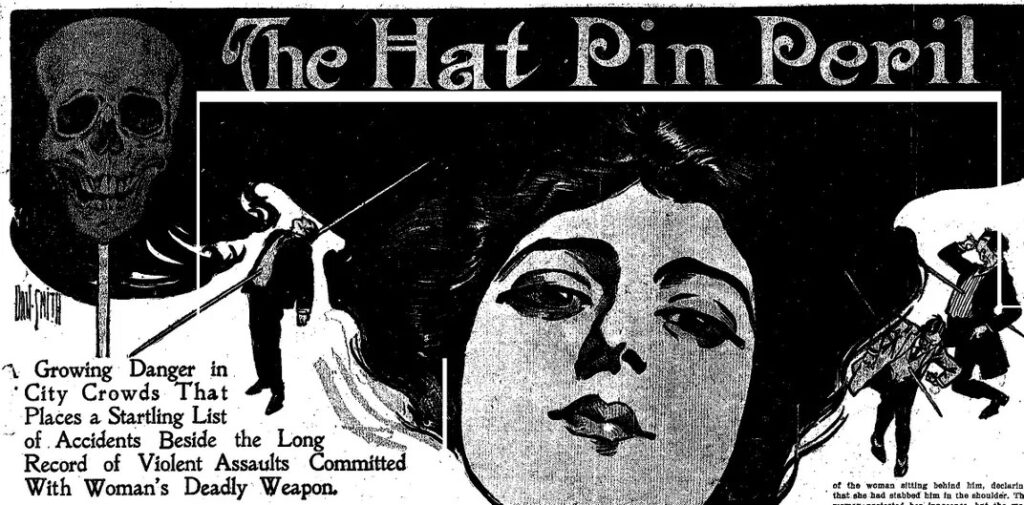
And as you can see from the melodramatic image above from The Cleveland Plain Dealer, March 3, 1907, men felt the danger of women finally taking their safety into their own hands.
According to an article in Smithsonian magazine: ”A New York City housewife fended off a man who brushed up against her on a crowded Columbus Avenue streetcar and asked if he might ‘see her home.’ … A St. Louis schoolteacher drove her would-be attacker away by slashing his face with her hatpin…”
In all of history woman were constantly unsafe from the unwanted attentions of men. It was and is a sad fact of life.
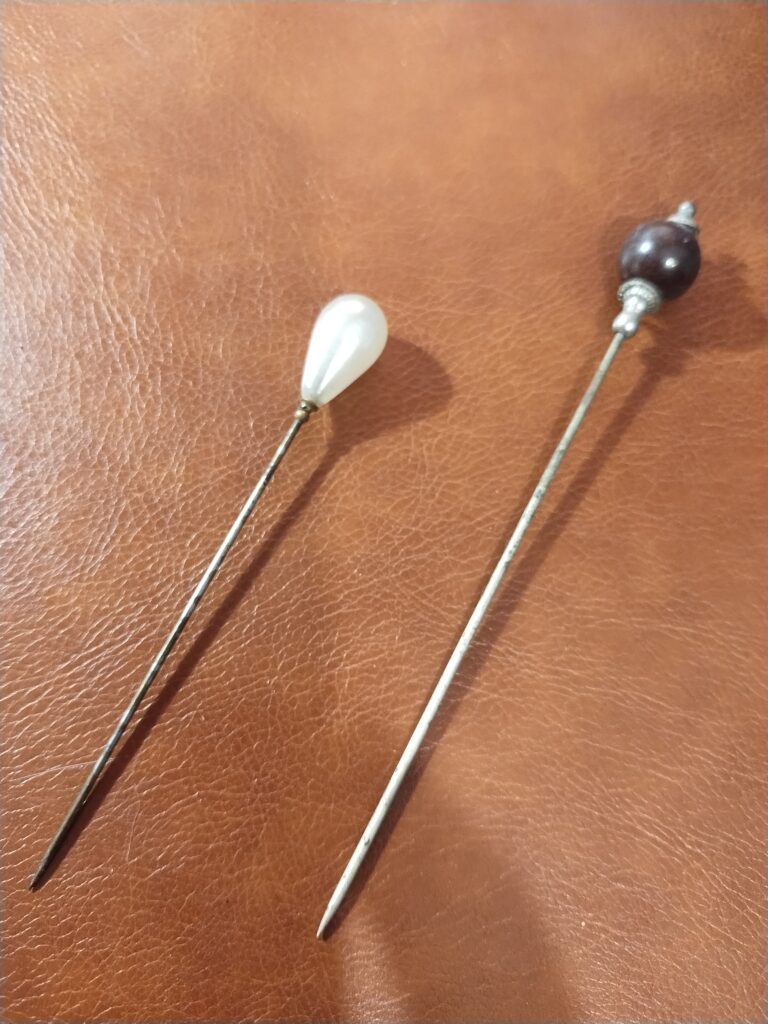
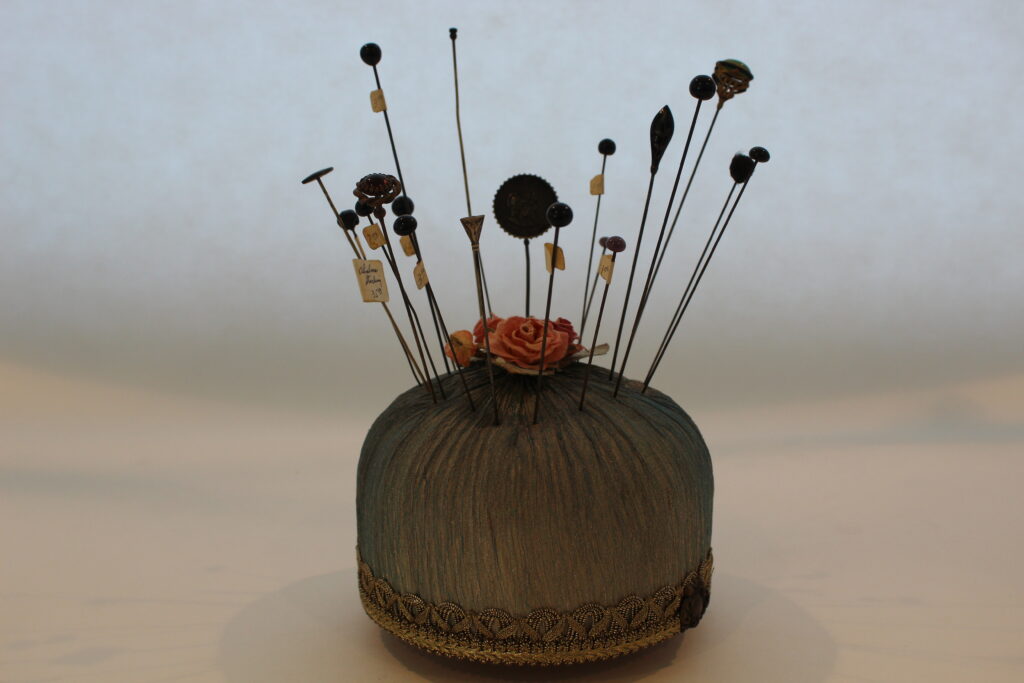
Hat pins were also part of life. These are two of mine, short late Victorian/early Edwardian hat pins. But many were much longer, as long as twelve inches. That would certainly keep a man at arm’s length.
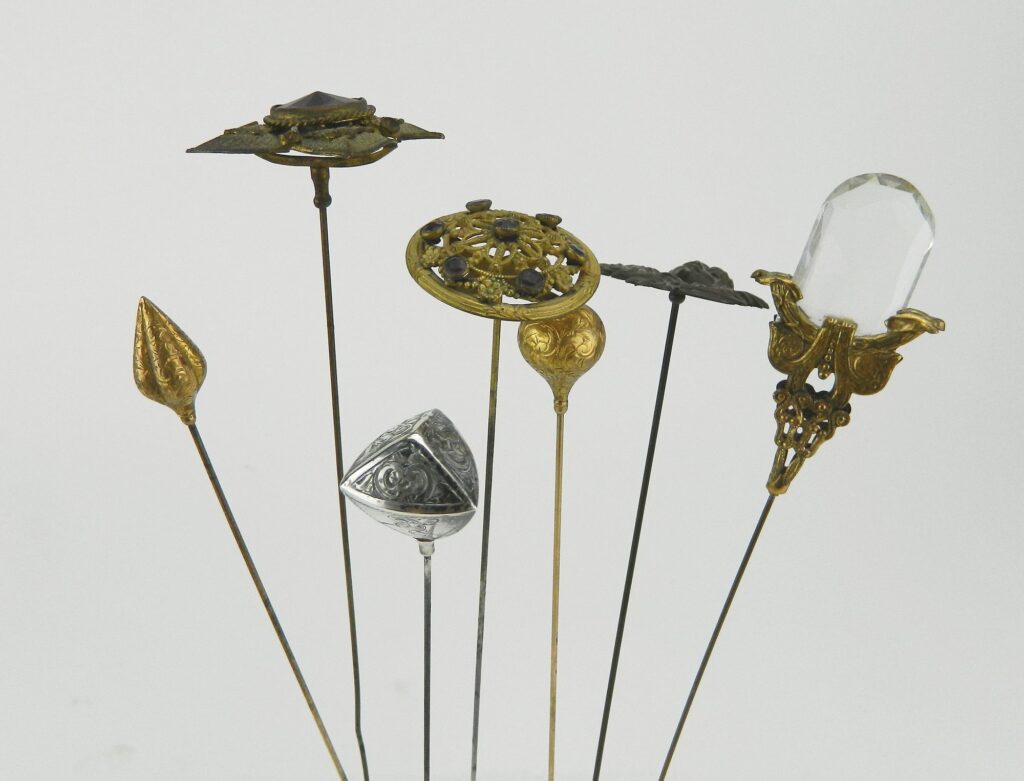
But as you can see above, objects of purpose in this era were also decorative. Why shouldn’t they be? It was simply part of a lady’s accoutrement for the day when venturing out.
This was a time when women and young girls were out on their own, working in factories, in offices, unaccompanied, working in private homes as governesses and finding that they needed protection even as they rode on public conveyances such as omnibuses/streetcars and subways/undergrounds. Training was needed.
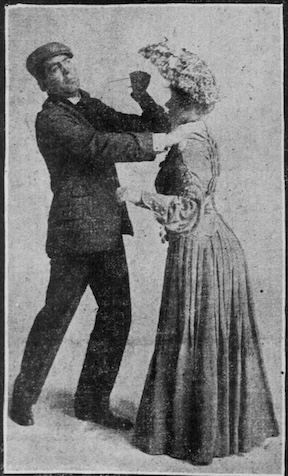
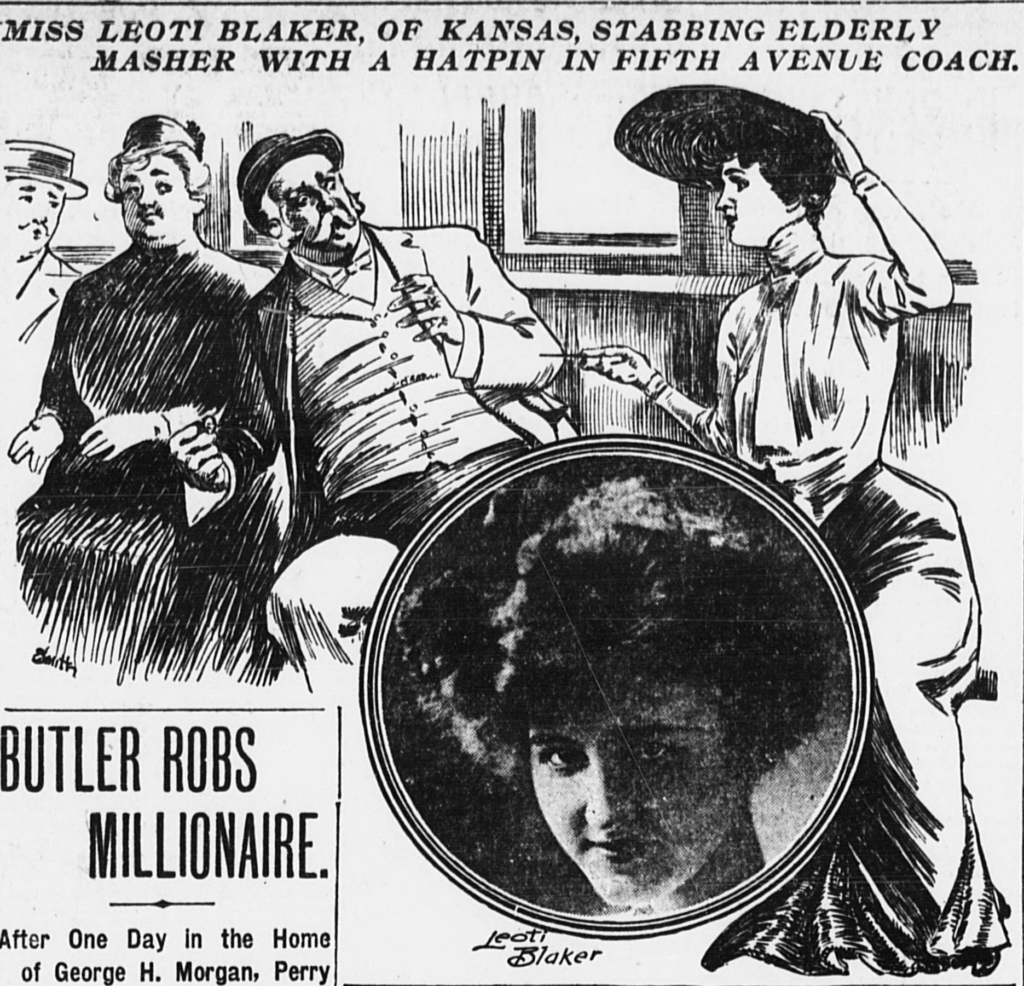
Men decried these woman, but woman considered them heroines. By 1913/14, Suffragettes were teaching other women how to protect themselves with ”Suffrajitsu”, a term used to describe using martial arts techniques and hat pins for self defense (see my similar Bartitsu article where men use hats, coats, and canes for defense) and offered training by members of the Women’s Social and Political Union. In a time when legal protections for women — even from their own husbands! — was zero, women had to step up to protect women.
But in Chicago in 1910, the city council thought women and their hat pins had gone too far. The council floated the idea of passing an ordinance to ban hat pins longer than nine inches. Any woman caught in violation would be arrested and fined $50. One woman, Nan Davis, representing several women’s clubs, stood up at the raucous meeting and declared, “If the men of Chicago want to take the hat pins away from us, let them make the streets safe. No man has a right to tell me how I shall dress and what I shall wear.”
But they passed the ordinance anyway. And the ordinance spread to many other American cities, and similar ordinances were passed in Australia and the United Kingdom. Women refused to blunt their hat pins or shorten them and were summarily arrested.
And so it goes to today where women’s bodies continue to be part of a public debate, with little input from women themselves.
The hat pin controversy ended by WWI, with new bobbed hair styles, but the mission goes on for women to protect themselves from unfair and unsafe laws where their very autonomy is still barred at the court steps.
Perhaps it’s time to bring back hat pins. Big ones.
Discover more from Jeri Westerson
Subscribe to get the latest posts sent to your email.
My grandmother used to tell me about using them this way!
Aha! Proof!
Suffrajitsu! I never heard that term before but I love it! 😀
Yeah, me neither. Women, huh. We are remarkable. And resilient.
I agree, let’s bring back hat pins.
Absolutely!