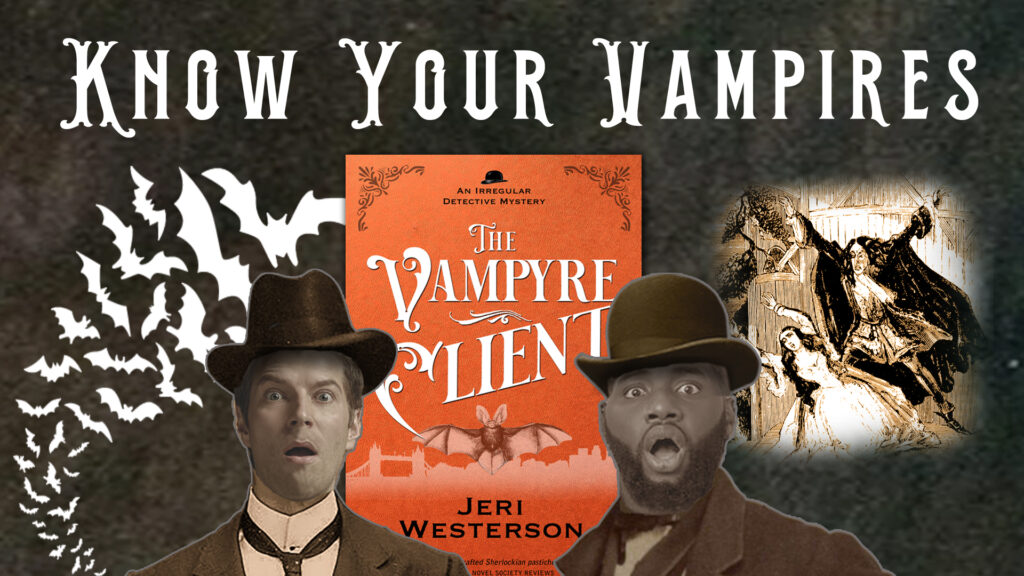
Do you know your vampires? Do you know what they look like, what their characteristics are?
My former Baker Street Irregular Tim Badger set up a detecting agency with friend and partner-in-detecting Ben Watson, under the mentorship of Sherlock Holmes. They encounter a man who claims his village neighbors are harassing him since they believe he is a vampire in my upcoming Sherlockian pastiche THE VAMPYRE CLIENT. In order to be thorough, I researched vampires and what they are really all about…and came away with something I could really sink my teeth into.
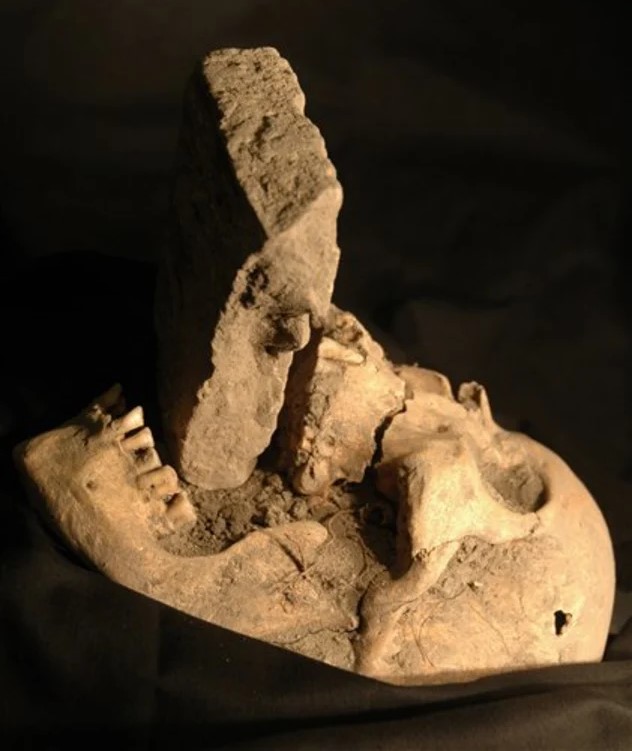
Starting from the beginning doesn’t mean we will be starting with Bram Stoker’s novel DRACULA from 1897 (two years after the timeframe of my novel), nor the folklore from the Balkans where some folks are still buried beheaded if they are suspected of being vampires, or with a brick shoved down their skull’s gullet.
But rather with 1816’S GLENARVON. This was the debut novel by Lady Caroline Lamb. Her character Ruthven Glenarvon was a thinly-veiled and unflattering depiction of her ex-lover Lord Byron, who was free with his female attentions. A lecherous vamp but not a vampire in the supernatural sense of the word.
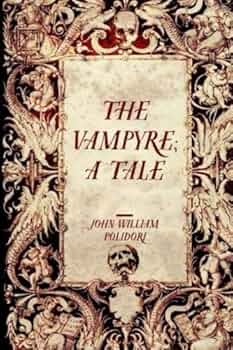
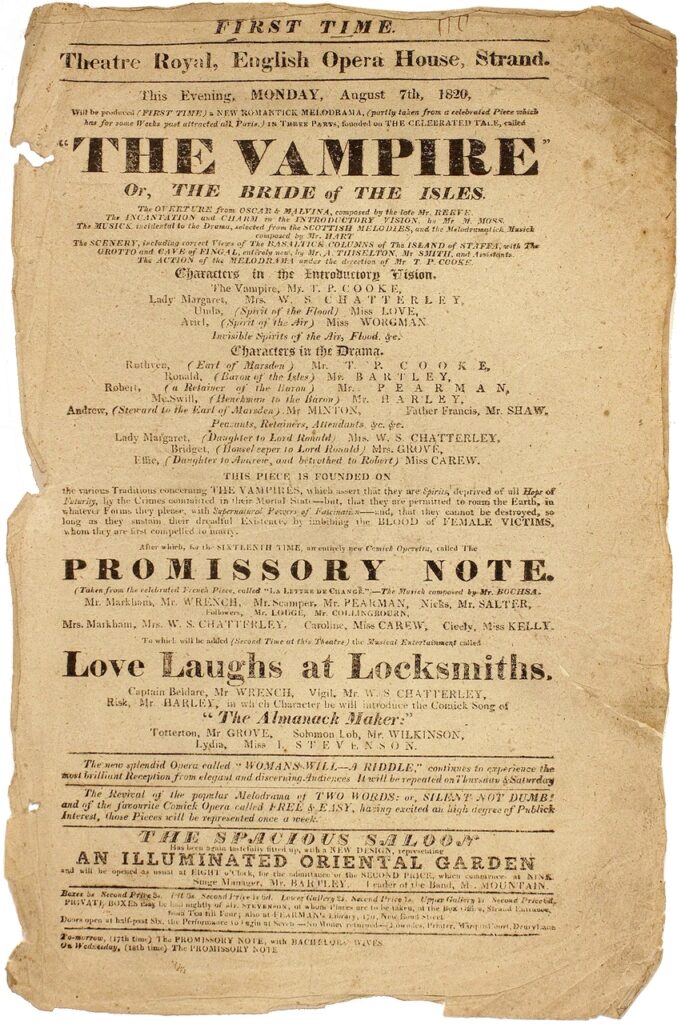
Then came along the short story THE VAMPYRE, by John Polidori, finishing a story that Lord Byron told during that celebrated weekend where Mary Shelley came up with Frankenstein in 1819. This vampyre was a nasty piece of work, breaking hearts and sucking blood.
But it didn’t stop there. In the 1820s, Paris was lousy with plays about sexy vampires. Le Vampire; Le Trois Vampires ou le clair de la lune; Encore un Vampire; Les Étrenne d’un Vampire; Cadet Buteux…and more!
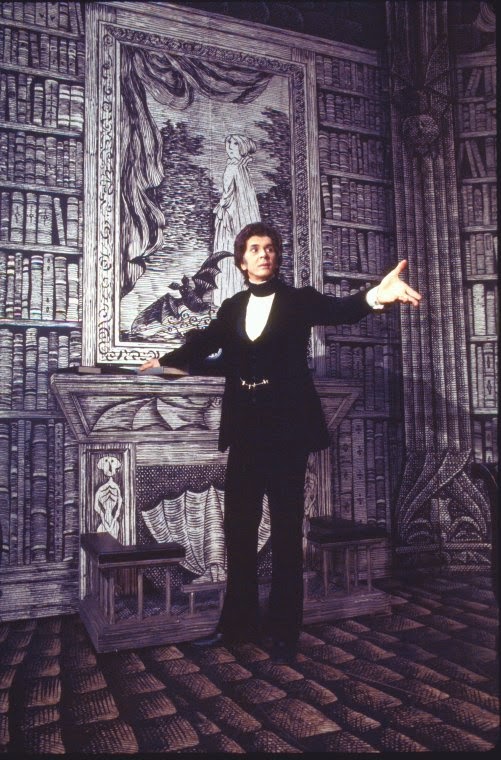
Then, finally, in 1897, DRACULA was published. Based a little on lore in the Balkans, and a lot more on imagination, Stoker created something quite different. But if you are thinking of sexy portrayals like Frank Langella in the stage and later film version of things, you’d be wrong. And I personally would have loved to have seen that on stage with all the Edward Gorey sets! Look at them!
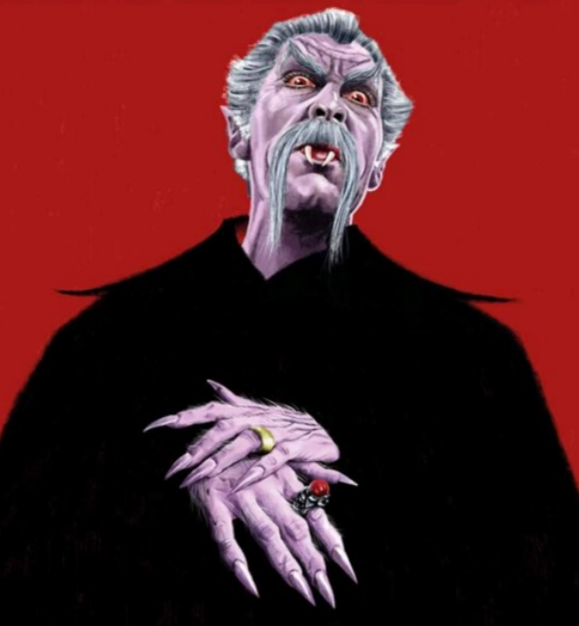
What Dracula really looked like in the books is someone thin and pale of face, a long, white moustache, a pointed nose and pointed ears, protruding teeth, nearly a unibrow, sparse curly hair on his head but hairy everywhere else, including his palms. Not exactly a sexy times kind of vampire.
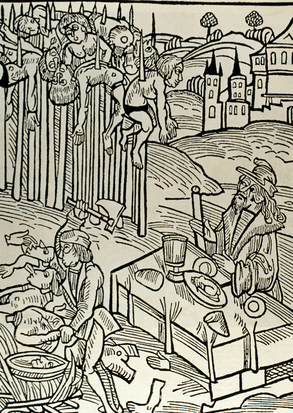
Stoker’s inspiration for Dracula is usually cited as Vlad the Impaler, but recent scholarship suggests he probably found the name “Dracula” in Whitby’s public library while on a research holiday and chose it because he thought it meant “devil” in Romanian. Special note: Always check your sources.
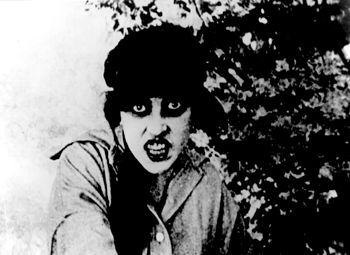
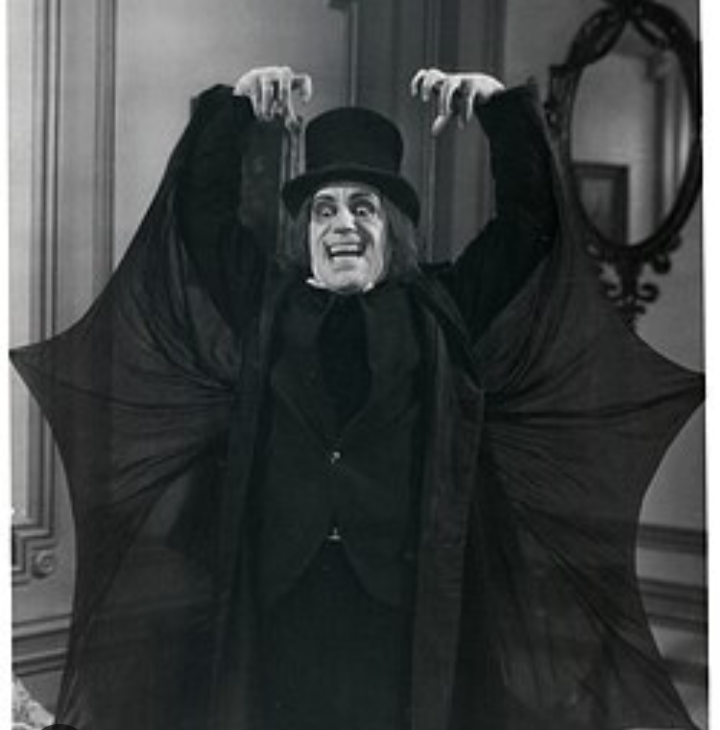
With the emergence of early silent films, we begin to see the sexy vamp again. And the scary ones. London After Midnight, the lost Lon Chaney Sr. silent film where we see Chaney in particularly scary makeup. Wouldn’t you have liked to have seen that?
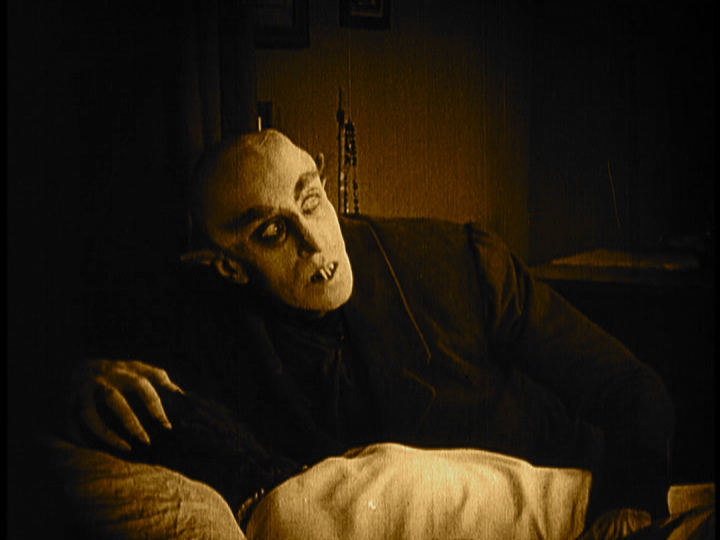
And then Nosferatu, the copyright violation story that widow Mrs. Bram Stoker fought for decades to suppress and was almost successful.
And then finally, the 1931 film Dracula based on the play, both with Bela Lugosi, who was supposed to be considered sexy back in the day.
Do vampires see their own reflections?
Stoker adopted some characteristics of folkloric vampires for his own: aversion to garlic, staking as a means of killing them. But he invented that they must be invited into one’s home, sleep on earth from their homeland, and have no reflection in mirrors.
Do they wear capes?
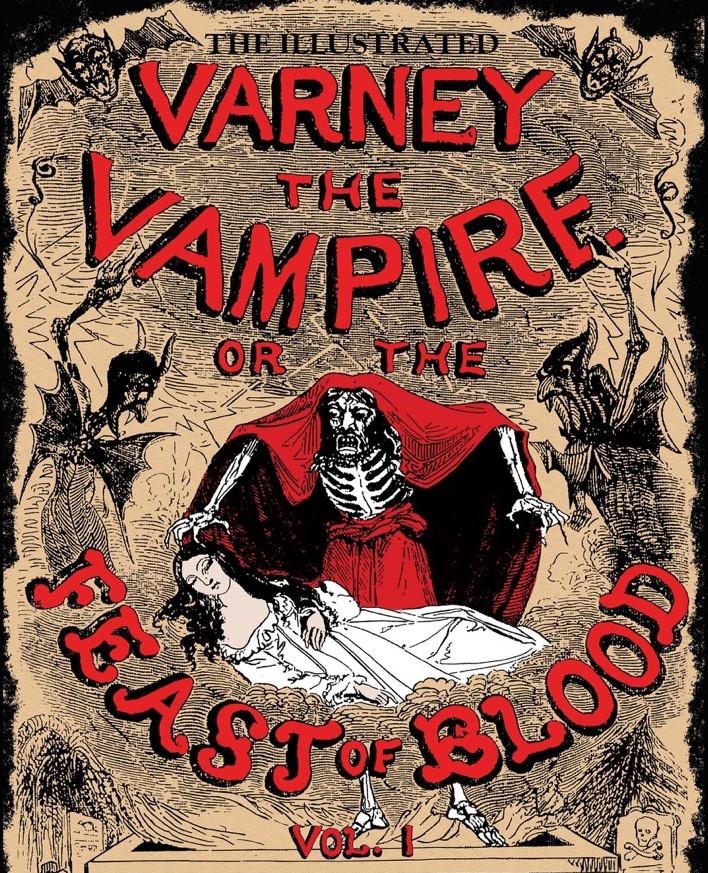
The cape-wearing Vampire with a high collar comes from the illustrations accompanying VARNEY THE VAMPIRE OR THE FEAST OF BLOOD. Also fang-like teeth begins here. It was released in pamphlets from 1845–1847 and, all told, the story is 667,000 words of contradictory and confusing prose. Still, people loved it. Was he really a vampire or someone who pretended to be? It went both ways.
Can they turn into a bat…a wolf…a washing machine?
The lesbian vampire of Sheridan Le Fanu’s Carmilla (1872) can transform into a cat, as Dracula can transform into a dog…and a bat. Washing machines might be convenient, but a little clumsy.
But since we are talking about my Sherlockian Pastiche here, let’s refer back to Sir Arthur Conan Doyle and his Sherlock Holmes short story The Adventure of the Sussex Vampire, one of twelve Sherlock Holmes stories collected between 1921 and 1927 as THE CASE-BOOK OF SHERLOCK HOLMES. It was first published in the January 1924 issue of The Strand Magazine in London and Hearst’s International in New York.
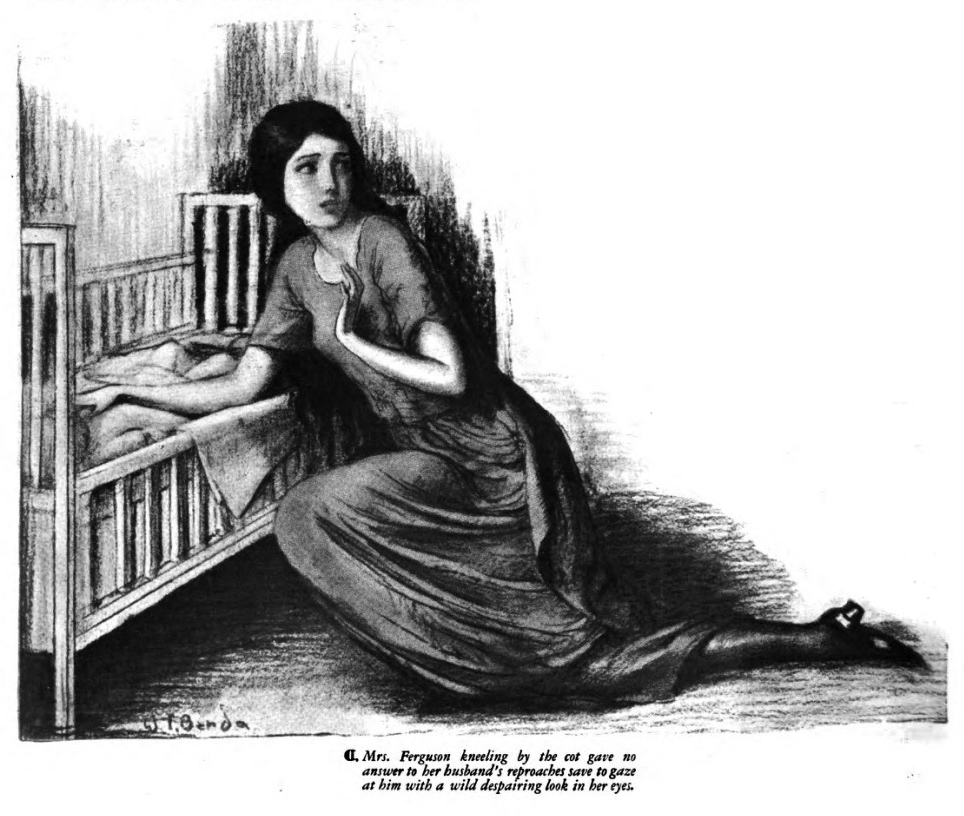
The story — with spoilers ahead: Holmes receives an odd letter that makes reference to vampires. A man tells Holmes that his Peruvian second wife was caught sucking blood from their baby son’s neck. He was naturally alarmed. He also has a 15-year-old son named Jack from his first wife, who suffered an accident as a child and now, although he can still walk, does not have full use of his legs. There’s a lot of suspicion going around. The man’s wife struck her stepson Jack several times and then sequestered herself away, never telling her husband why. Holmes, of course, worked it out long before he and Dr. Watson arrived to the Sussex home; that Jack was jealous of the baby and had been shooting Peruvian poisoned darts at the baby so that the mother was forced to suck out the poison (still a good enough reason for slapping the 15-year-old) but not telling the husband about it for fear the family would break up. Boarding school was probably a better option.
Doyle here, as he had in two other stories, one being the novel THE HOUND OF THE BASKERVILLES, and the other short story The Adventure of the Creeping Man, followed the popular penny dreadful stories, lurid tales of vampires, ghosts, fiends, and non-supernatural villains. Only in Doyle’s case – even though he was a believer in seances and other supernatural things – wouldn’t allow his scientific detective to believe in the supernatural, and always sussed out the true cause of these events, much like a Scooby-Doo episode.
But even as Doyle used the penny dreadful genre, others continued in the supernatural vein, with more modern takes of vampires; Anne Rice’s The Vampire Chronicles, Charlaine Harris’ Southern Vampire Mysteries, Buffy the Vampire Slayer, Stephanie Meyers Twilight series, and so on.
So it is important that when you encounter vampires or vampyres, you know who you are dealing with; An unsexy white-moustachioed Dracula, a bat-like Nosferatu, a sparkling vampire in Seattle, or hang-dog Louis in New Orleans. If you aren’t exited around them, a stake through the heart is the way out of that relationship.
Come to think of it, it’s really a way out of ALL relationships.
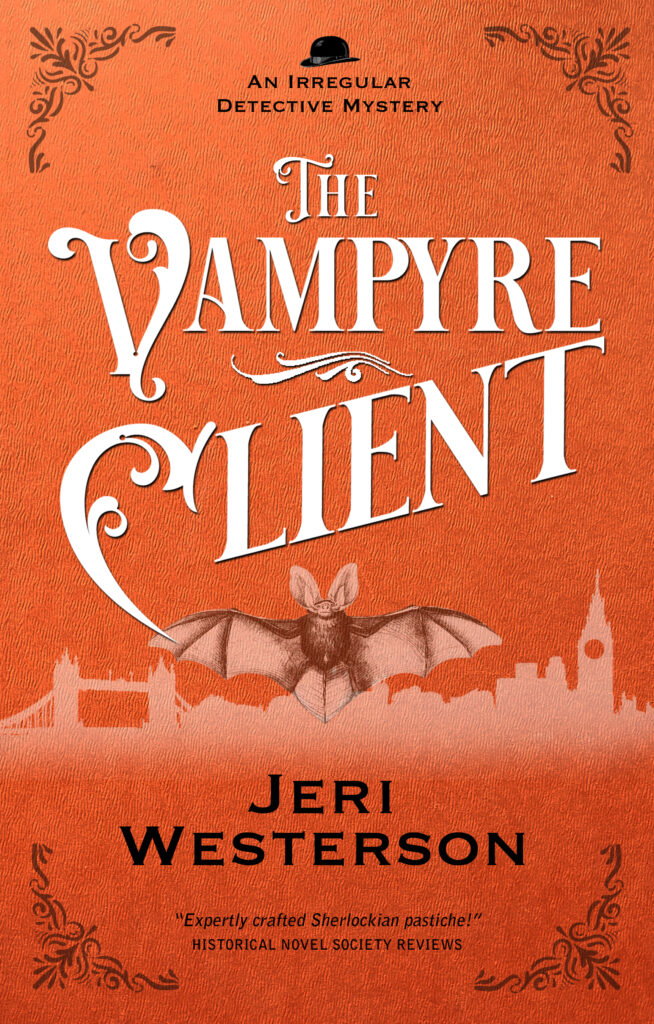
THE VAMPYRE CLIENT, book 4 in An Irregular Detective Mystery series, will release 1 May. Pre-order ebook, paperback original, and audiobook.
Discover more from Jeri Westerson
Subscribe to get the latest posts sent to your email.