It’s certainly not what you’d think. Oh, they had parties (the Vics LOVED their parties) with adults dressing up in strange costumes. And there is the Celtic traditions, of course, of Samhain (pronounced SOW-in), meaning “summer’s end” and believed that this particular time of year thinned the veil between the natural world and the supernatural one. And it was also near All Souls Day, which was a time for sharing “soul cakes”, small round spiced cakes (recipe below). In earlier times, they would carve out a turnip with a candle inside. Truly, much scarier than carving a pumpkin. But pumpkins were New World fruit, and they didn’t become a popular import till around mid-1800s (and way easier to carve, I can assure you).
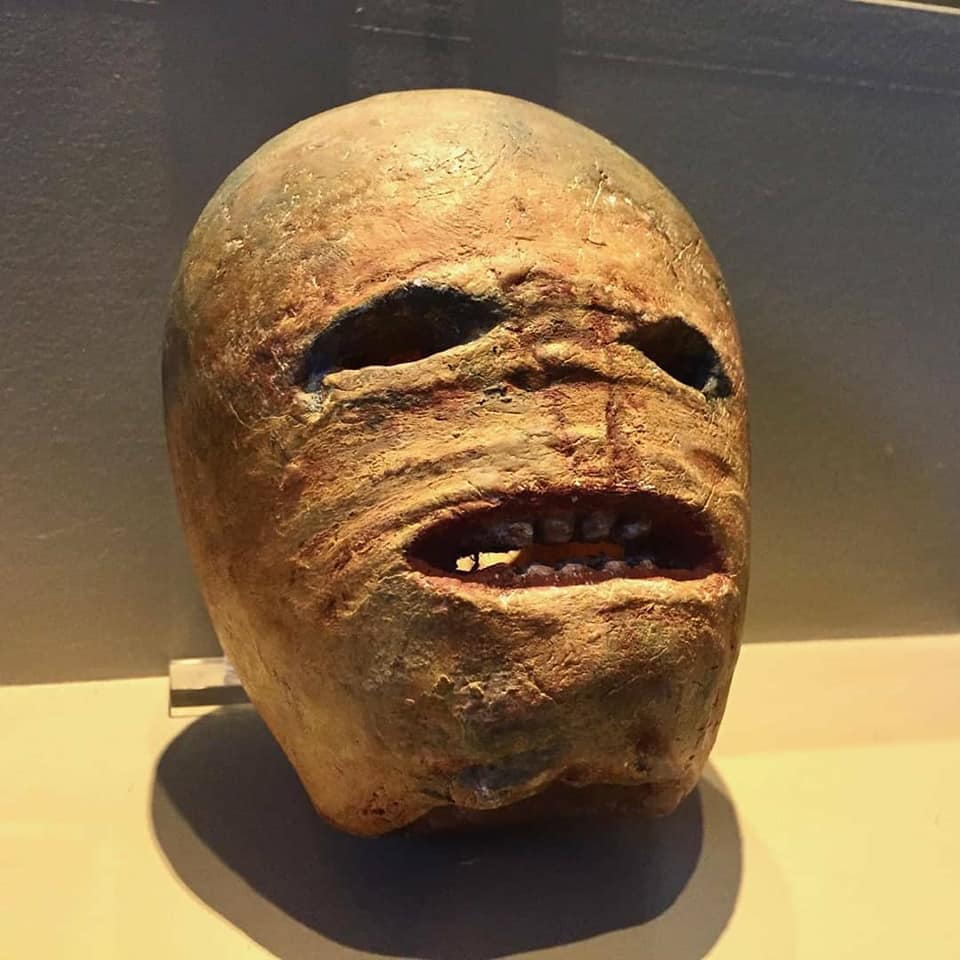
A turnip carving. Terrifying, isn’t it!
But by the mid-1800s Samhain morphed into something quite different. It wasn’t for celebrating ghosts and goblins.
It was for match-making.
Yup, you read that right. It was a time for seeing what the future held for them, marriage being foremost on a young woman’s mind.
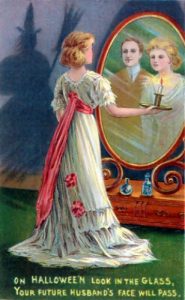
A greeting card (yes, Victorians invented greeting cards) that says “On Halloween, look in the glass. Your future husband’s face will pass.” Weird, huh?
There were oodles of parlour games (and just a reminder, Ouija boards were also benign parlour games, safe and fun for the whole family! And popular at this time too). So I suppose divination went right along with looking for that husband. Because as the card above suggests, one of the games was for a woman to go into a dark room and look in a mirror. You weren’t looking for Bloody Mary. Instead, if all went well, you’d see the image of your future husband. If it didn’t go well, you’d see a skeleton, telling you you’d die alone. Fun times!
There were cakes to bake too, but these cakes must be eaten very carefully as you would add needles, thimbles, coins, and a ring to the batter. Not as a scary thing like this…
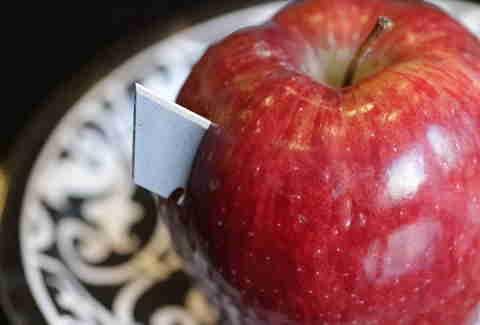
Actually an urban legend.
Because if you found a coin or a ring, it meant happiness ahead. If you found a needle or a thimble, it meant spinsterhood for you with plenty of spare time to sew, I guess.
More parlour games included reading tea leaves for — you guessed it — finding that perfect mate.
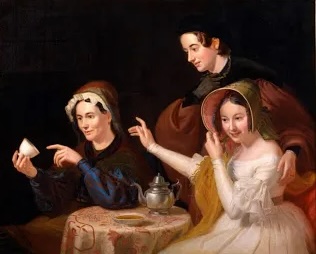
Tea leaf reading.
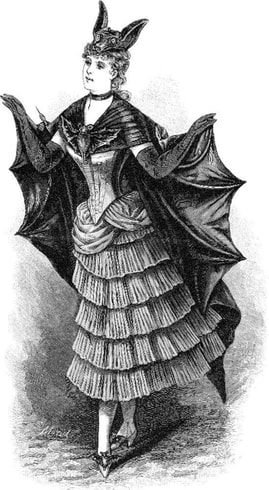
Costumes have always been fun for parties and Halloween was no exception. Except that it wasn’t scary stuff or ghoulish. It was Mother Goose-themed, or characters from books, or some other thing like the Hornet below.
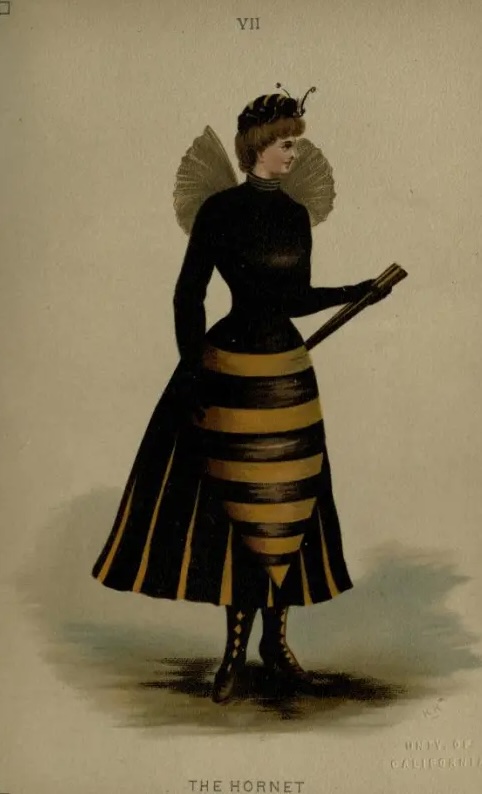
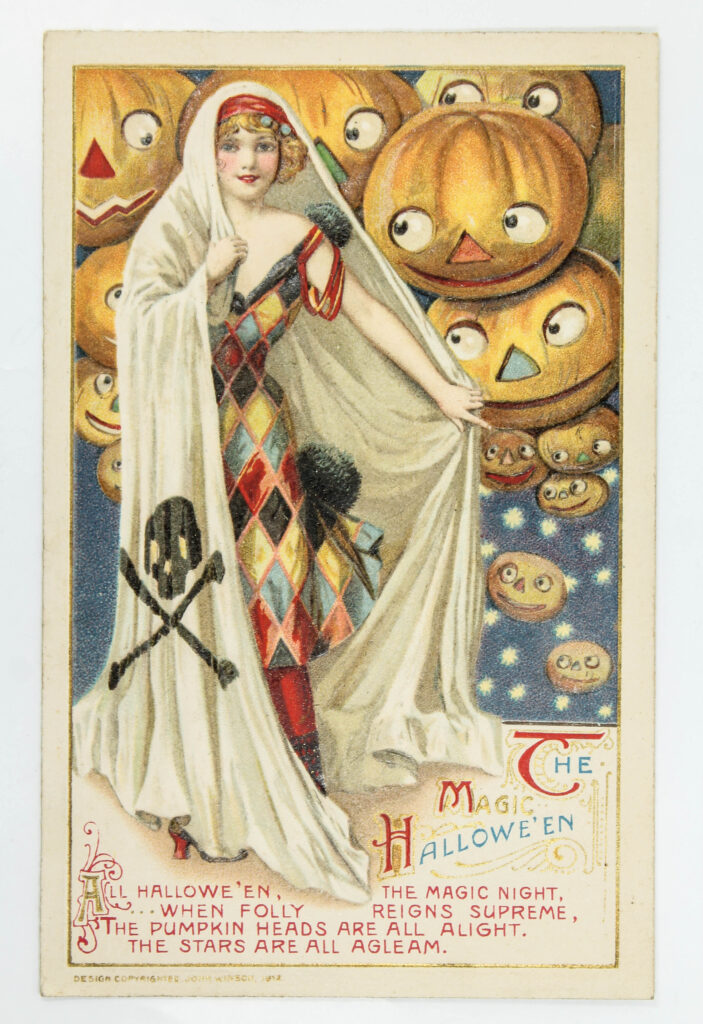
Still, it was also a time to put your mind not just on the future, but to the past. Queen Victoria was said to have loved Halloween and got the celebrations going at Balmoral Castle in Scotland, one of her favorite places. Big, expensive, costume parties. She always kept the memory of her beloved Albert close at hand.
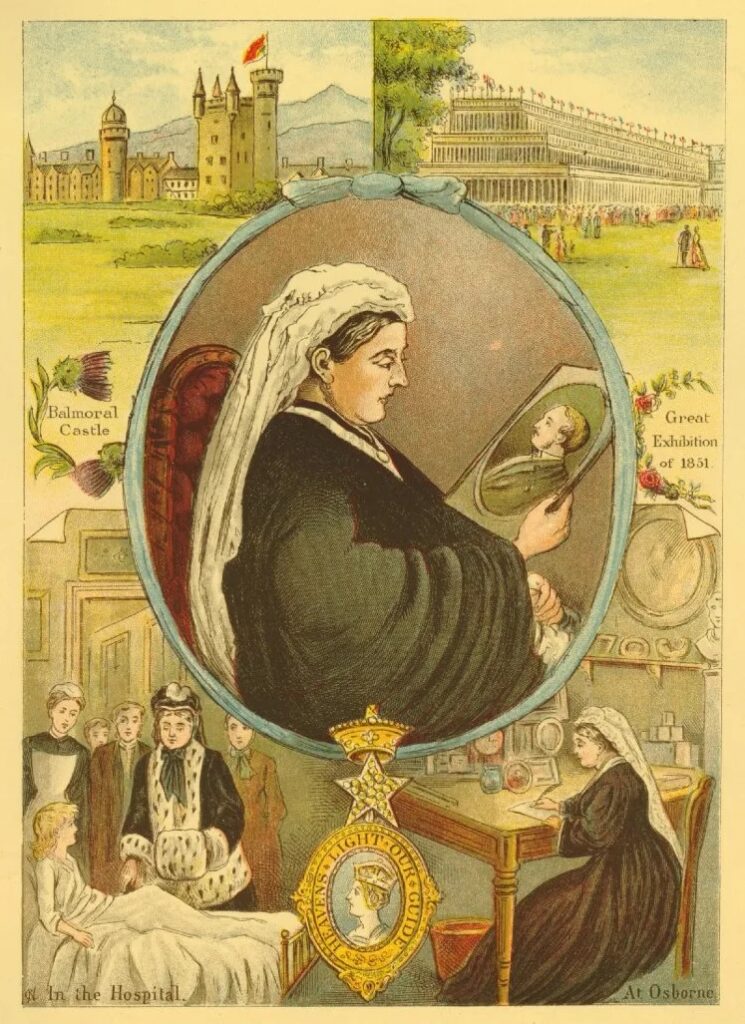
The thing of it is, Victorians just weren’t as prudish as depicted in stories and films. They loved having a good bawdy time…within reason. Costumes weren’t risque. But Victoria was a rather randy young lady. After all, she and Prince Albert produced a volleyball team of children (she had no miscarriages and all her children lived to be adults. That’s a pretty darned good record for those days). So a good party was a good party. Sometimes she had an effigy of her least favorite prime minister, like Gladstone, dressed up like a devil. And often they’d throw it into a bonfire.
I think she was very amused.
And now, a recipe for a Soul Cake or Soulmass Cake for Halloween, All Saints Day and All Souls Day. The practice started in medieval times and went right up until the 1930s. But you can make them right now!
SOUL CAKES
Makes 14 large ‘cakes’
Recipe Ingredients:
1.5 cups all-purpose flour (sifted)
3/4 cup sugar
3/4 cups butter (softened & diced)
1/2 tsp ground cinnamon
1/2 tsp ground allspice
1/2 tsp ground nutmeg
1 egg (beaten)
2 tsp of white wine vinegar
Preheat the oven to 400F and grease 2 flat baking sheets
Mix all dry ingredients together in a mixing bowl – flour, spices, and sugar. Use a pastry cutter or your fingers to cut in diced butter until the mixture resembles fine breadcrumbs. Add in the beaten egg and white wine vinegar and mix with a wooden spoon or your hands until a firm dough is made. Then cover it and put it in the fridge for 20 minutes.
Flour a working surface and roll out the dough to 1/4 inch thick and using a large round cookie cutter or the rim of a drinking glass, cut into rounds and slash a cross on the top of each round. Place these rounds on the greased baking sheet and bake in the oven for 13-20 minutes at 400F until slightly browned. (These are really cookies rather than cakes).*
*recipe Americanized and stolen from here.
Discover more from Jeri Westerson
Subscribe to get the latest posts sent to your email.