In every era, there are those things that just seem indispensable. And yet, as fashion trends come and go, so do these “indispensable” items.
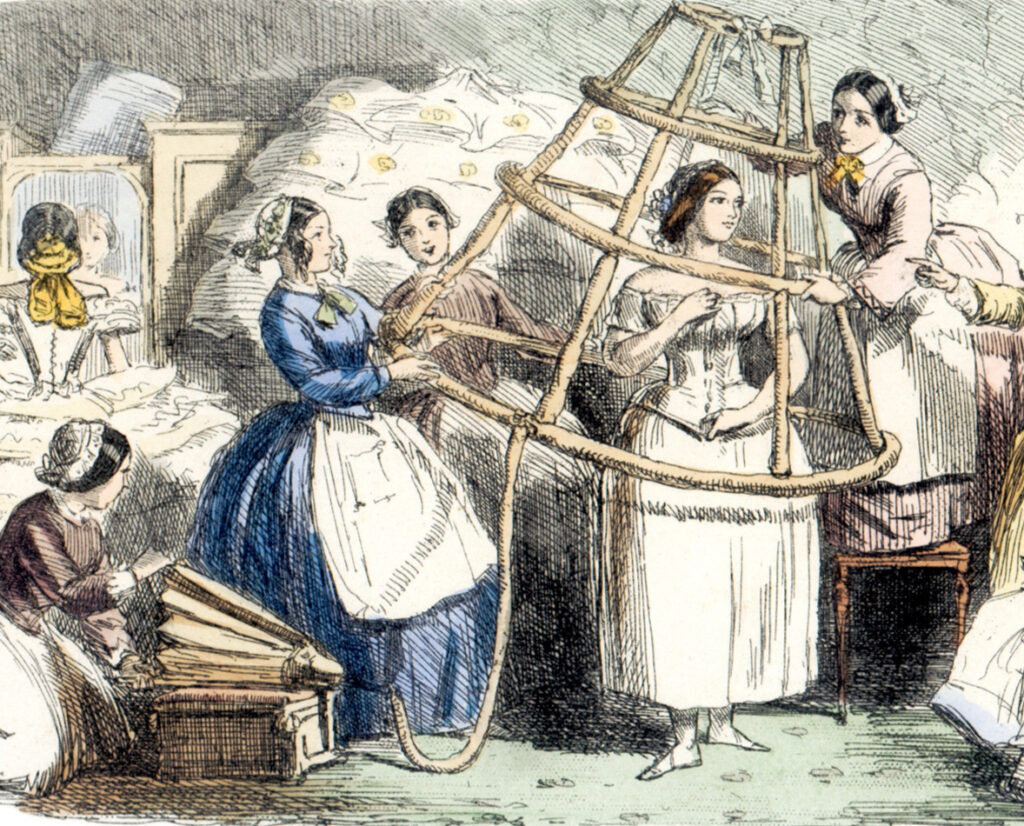
Inflatable crinoline from a Punch cartoon, 1857
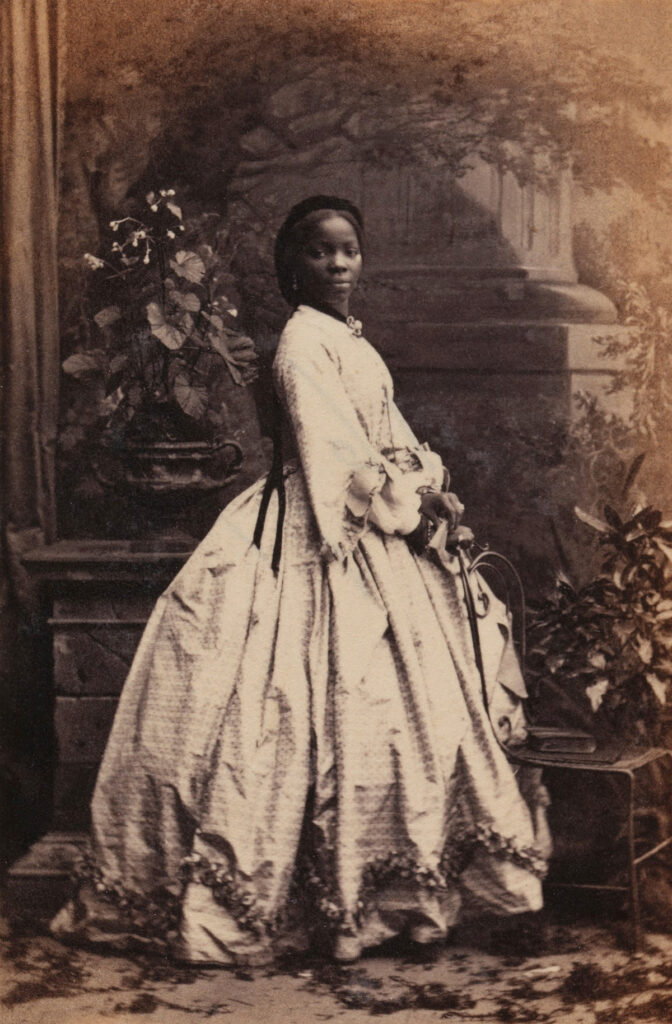
Sarah Forbes Binetta, 1862
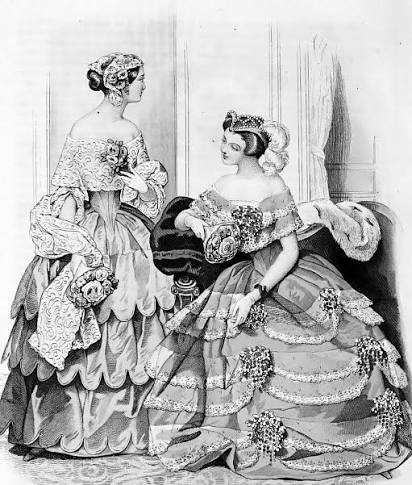
The most are probably undergarments. Though corsets and garter belts made a comeback for a certain kind of accessory activity, it’s the crinoline, hoop skirts, and bustles that are, generally, no more. Crinoline and hoop skirts were to shape the outer skirt. Now remember, Victoria reigned an awfully long time through several style changes; we have the Scarlet O’hara hoop skirt dresses from the late 1850s to 1870s, and then by the 1880s we have the skirts narrower but the backside more pronounced with a bustle. Fashions!
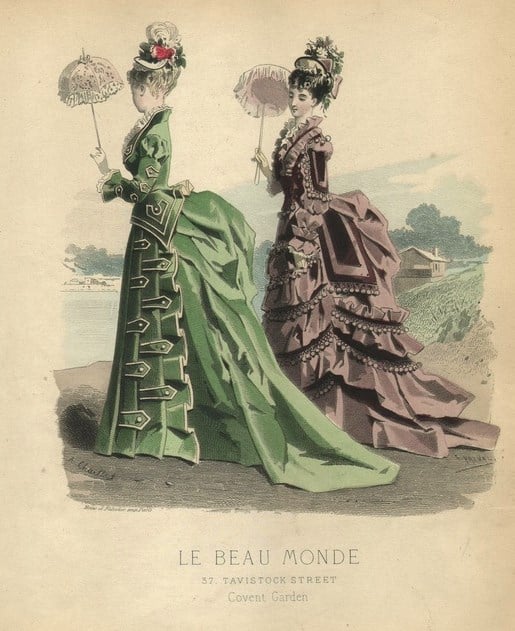
Bustle and skirts
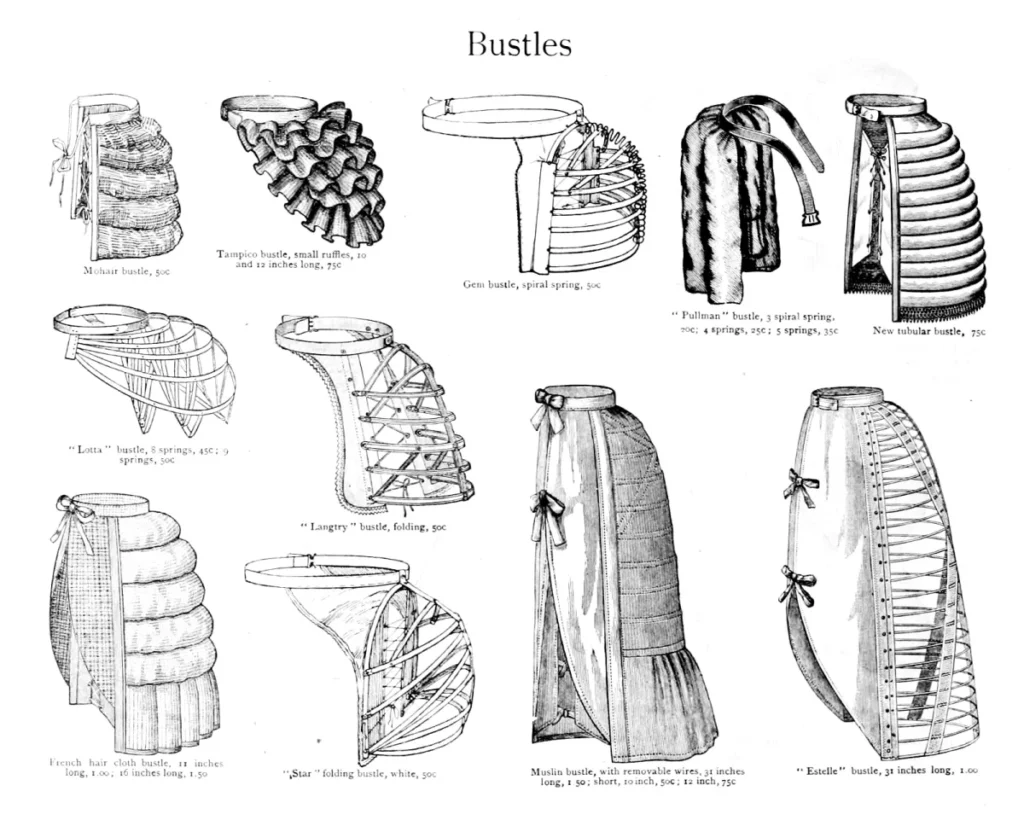
Dressing properly sure came with a lot of inventory, and a lot of money to invest in it.
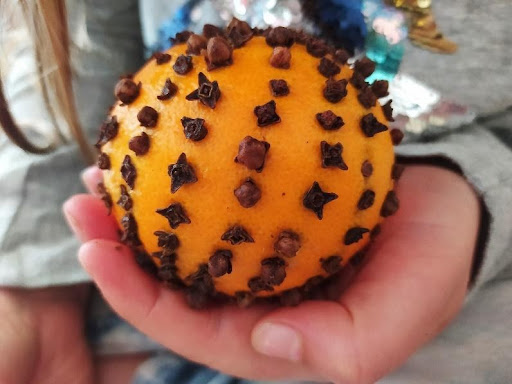
But besides all the ruffles and crinoline and a caboose that needed special chairs to sit in, there was also the SMELL of the era. Soap is an ancient invention, but let’s face it, without our modern deodorants life was tough amongst the hoi polloi. This was true in medieval and Tudor times. In those time periods, one would keep a perfumed kerchief handy to bring it up to the nose when the horse droppings in the streets would become too much for you. Or they would make a pomander out of an expensive (for the time) orange with a decorative insertion of whole cloves to sniff.
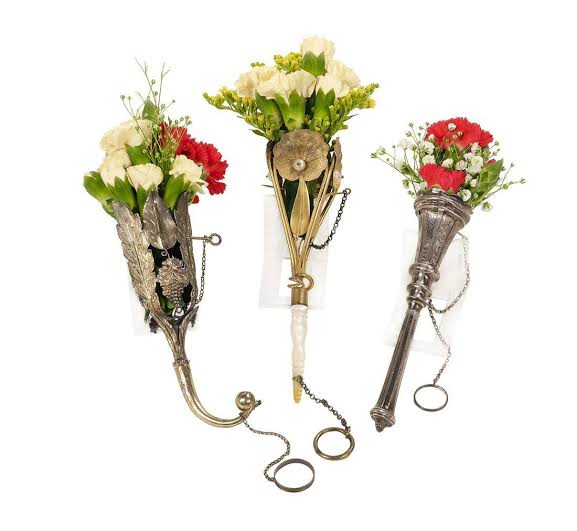
But a nice Victorian lady would have for herself a tussie-mussie, small, handheld floral bouquets. Either for sentimental purposes of a lover who gave you the flowers, or to mask unpleasant city odors…and city dwellers from m’lady’s delicate nostrils. (Originally, the term was tusmose from around the 1400s, to tussie, meaning a “knot” or “bunch” of flowers, and mussie referring to the damp moss placed around the stems. Later, the small bouquet was encased in a silver sheath for carrying or an even smaller one for pinning to one’s clothing).
Now, thank goodness, we have deodorant.
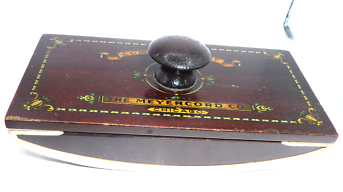
When one is writing with dipping pen and ink, the ink sticks around. It needs to dry before it smears all over the place. A rolling blotter is just the thing. It absorbs those pesky proud ink dobs and keeps your letters clean.
A castor set. So ubiquitous, you wouldn’t even remember having one. They were on British and American tables from the 1700s until the 1950s! They had in them a salt and pepper shaker, a cruet set of oil and vinegar, and a jar for jam or mustard. If you want to know more about them, see my blog post about them here.
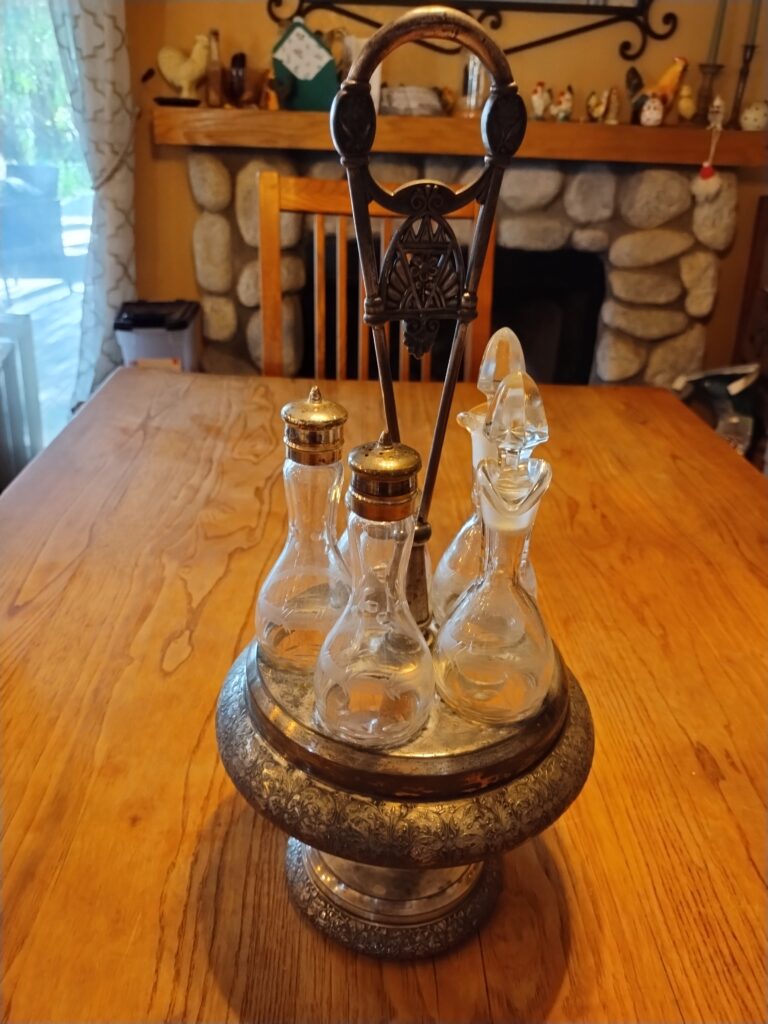
The author’s own.
Fluting Irons. Once your clothes were hand-washed and hung dry, you weren’t done with the laundry. You couldn’t just take an iron warming on the fire and get it wrinkle-free. Because some of the things you wore needed to get their pleats back. (Now, you would positively NOT wash your outer garments. Washing destroys them. And the outer garments are expensive. It’s really the undergarments, the things close to your skin that get dirty and smelly. Those would get laundered. The outer garments would simply be brushed and spot cleaned.) So there were ribbons to be gussied up and collars and cuffs to be made fancy.
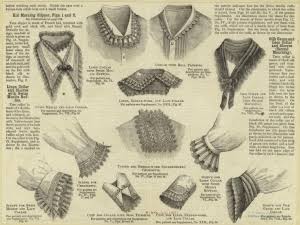
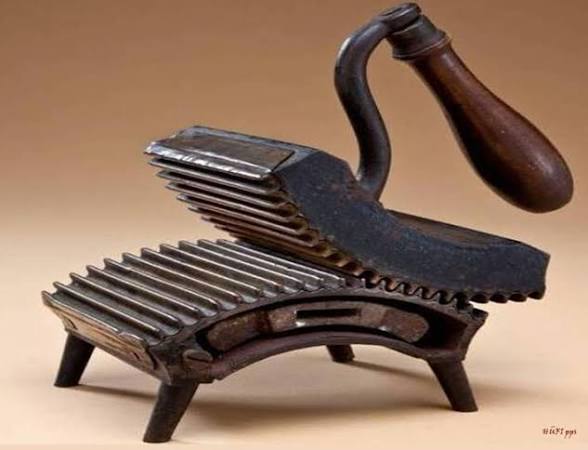
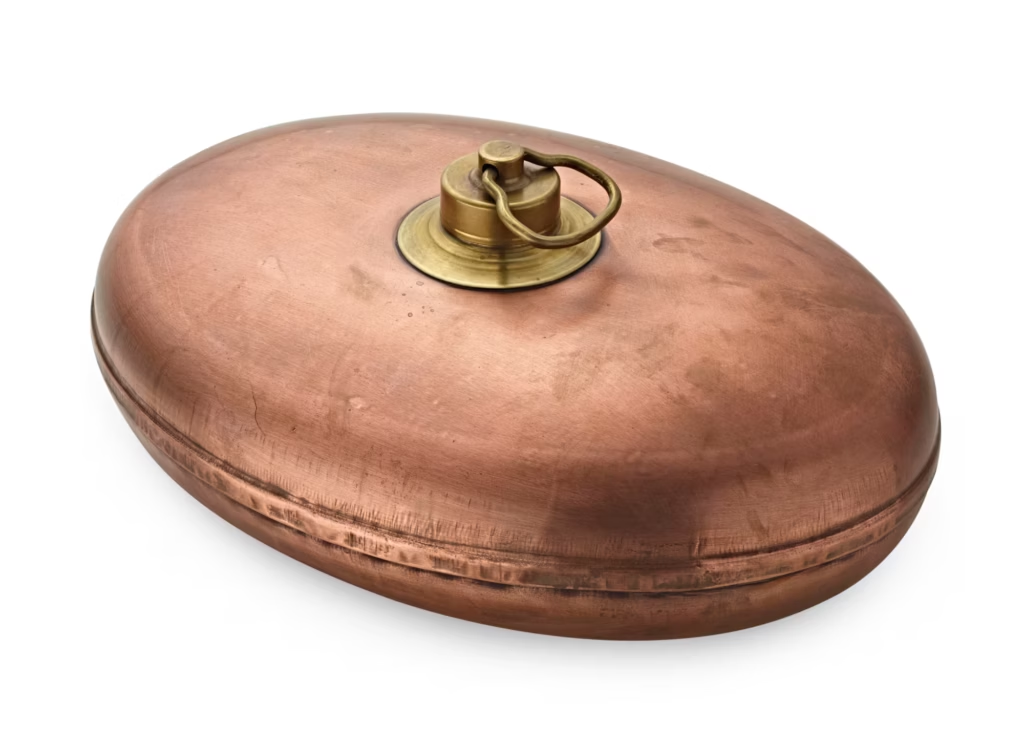
Once the day was done, one needed the bed–those cold sheets–to be warmed. And so the bed warmer, precursors to hot water bottles in the twentieth century. You’d throw back the covers, fill the bed warmers with hot coals, and ease them over the sheets. Not advisable to keep them in the bed as they might catch the sheets on fire.
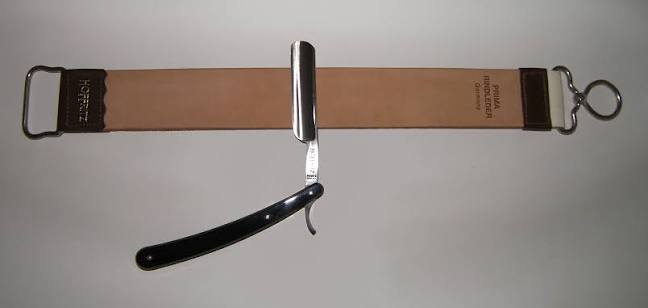
 Now don’t be scared about this next one. It is merely a razor strop for cutthroat razors. It’s to sharpen the blade. But, granted, it had been known in use for punishment of naughty children. Not very nice, though. You hung it by the circular hook, and grabbed it by the other side and ran your razor over it for a sharp edge.
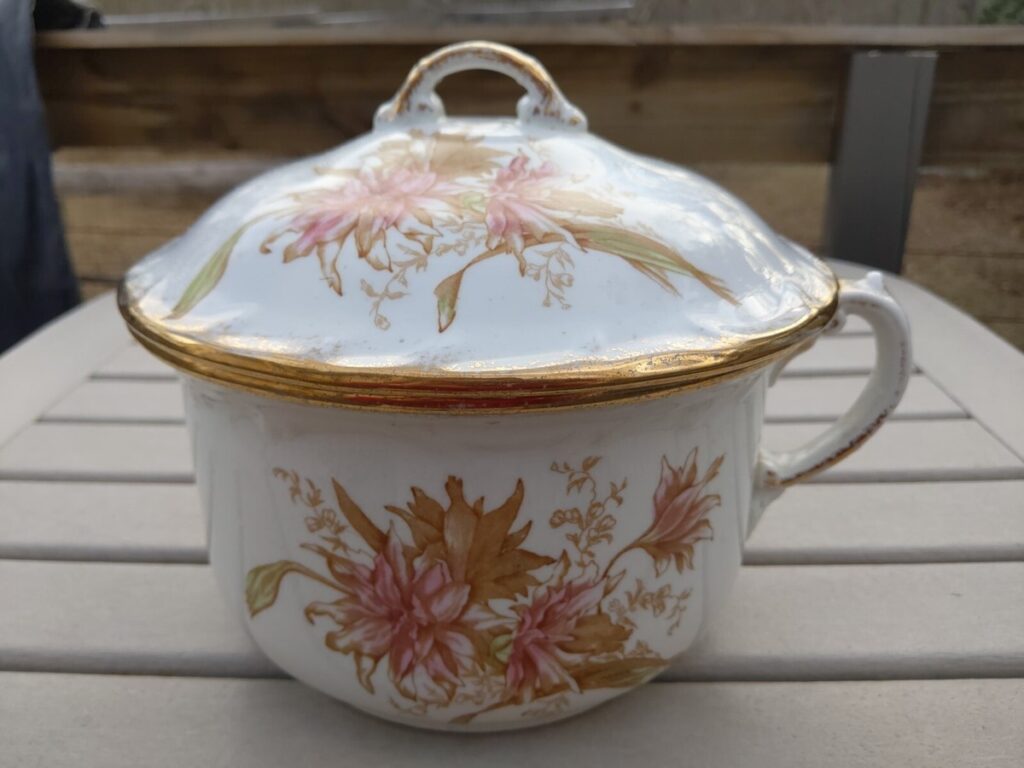
And finally, if you ever see these in antique stores–and I’ve seen plenty–they are often without their lids. No, they aren’t giant tea cups. They are chamber pots. The chamber pot does go back to medieval days, when all loos were outdoors, but you needed something for the cold of night to slip under the bed. And that’s why the lids were important. But very often, they would not survive moving and were broken and tossed away. Indoor plumbing made these accessories obsolete, but one might still need them in poorer places during the long reign of Queen Victoria.
There are many more items, but these are some you might encounter in the wild. New tussie-mussies are still made for brides, and are a very pretty decorative object to wear on one’s dress.
Discover more from Jeri Westerson
Subscribe to get the latest posts sent to your email.
Lovely reminder/descriptions of items from the past with wonderful illustrations as well. Yes, people got smelly, even if they washed every day, and the clothes weren’t always the freshest either even after washing. Loved the picture of the pleating press, so many people have never seen one.
So much work for fashion
Lol. I would argue that the bustle did make a comeback in the form of butt injections! I’m glad the tussie-mussie is still in use. That’s one fashion item that I wish would come back to daily use. Everything is better with flowers 😉
That’s hilarious!