It’s safe to say that Victorians may not have put so much emphasis on the death of loved ones had Prince Albert lived. But when he died in 1861, ending their 21-year marriage, it threw Queen Victoria into a 40-year mourning period…and the rest of the country too!
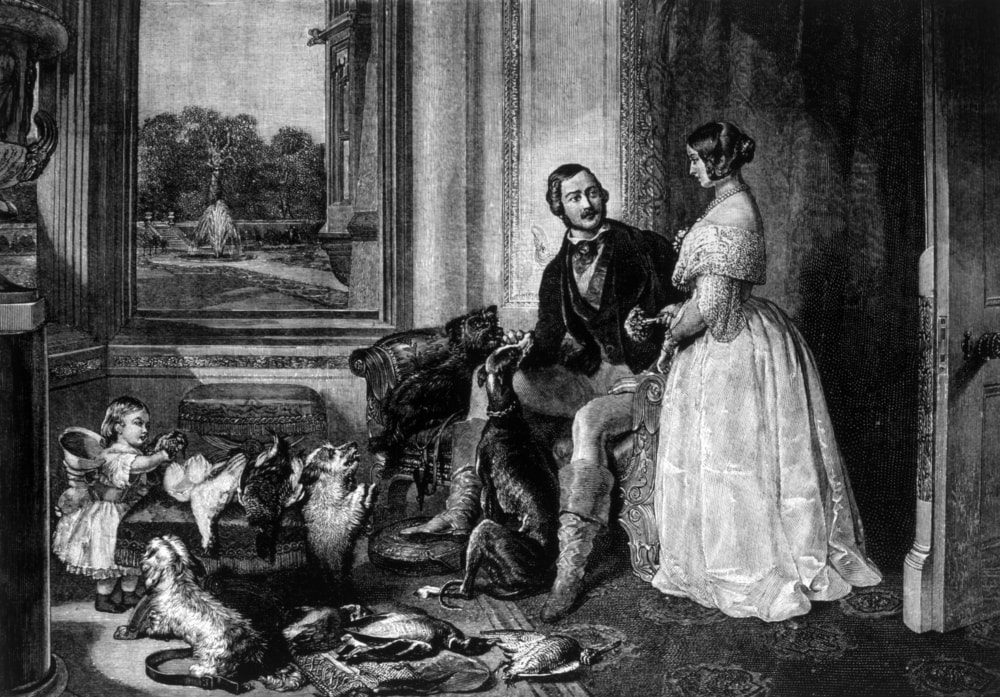
A young Queen Victoria with Prince Albert, one of the children, dogs…and dead fowl.
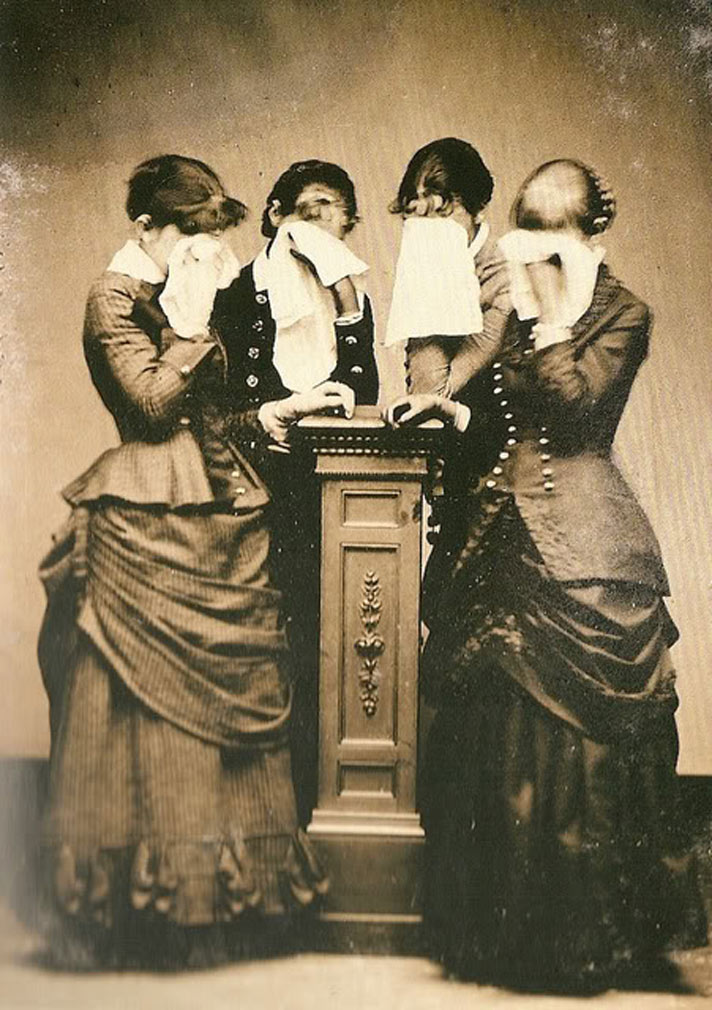
Mourning clothes. The rules about that were strictly followed. With women, naturally, facing more strictures than men. One didn’t want to flout the rules, because you didn’t want to be shunned by your social circle. These rules were, of course, for middle and upper class people. Lower income people really couldn’t afford to follow those rules, as you shall see.
Widows are expected to mourn for two to two and half years! For that first year, (Deep or First Mourning) they were required to wear unadorned black clothing such as crepe or bombazine and a heavy black veil, so heavy one could not see your distress through it.
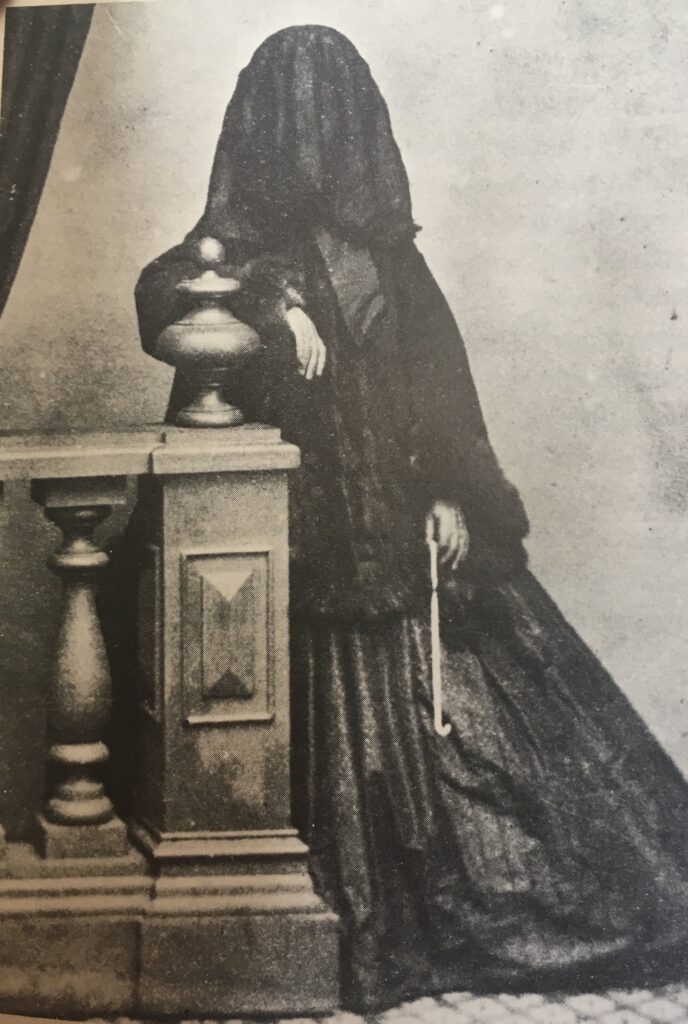
Is there anybody in there?
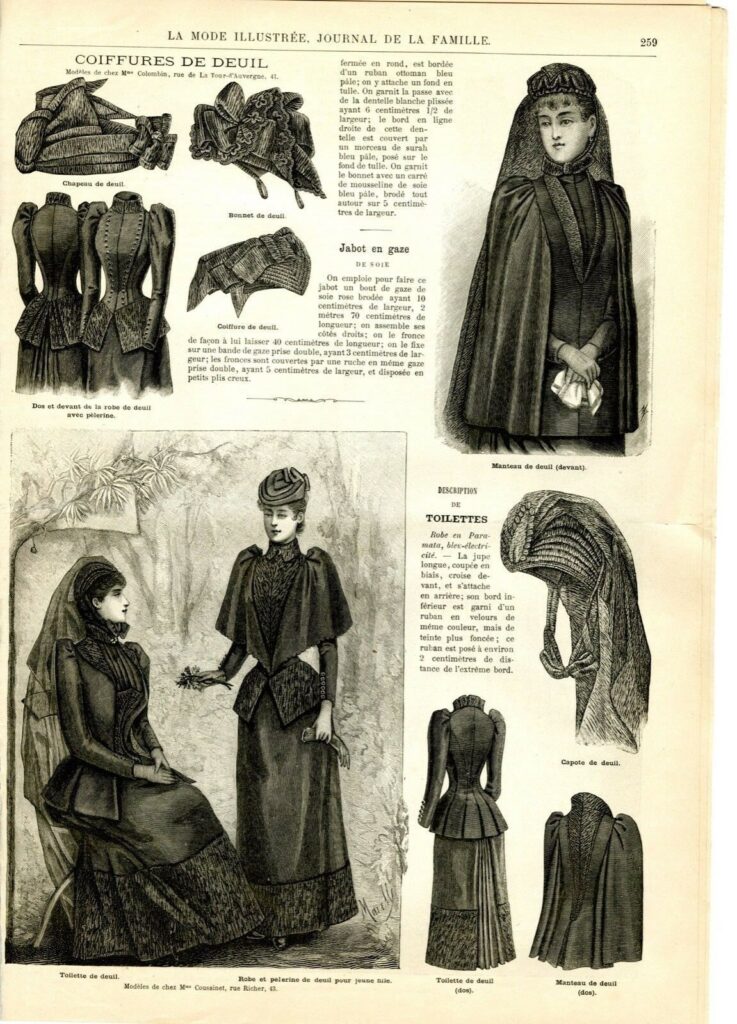
For Second Mourning (9 months to a year after the death), you were allowed to discard the heavy crepe and veil, and could introduce shinier fabrics, still in black or grey, and don some jet mourning jewelry.
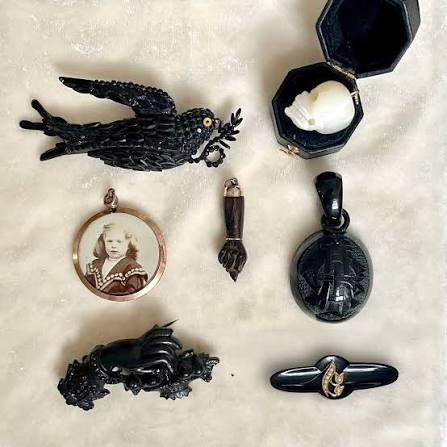
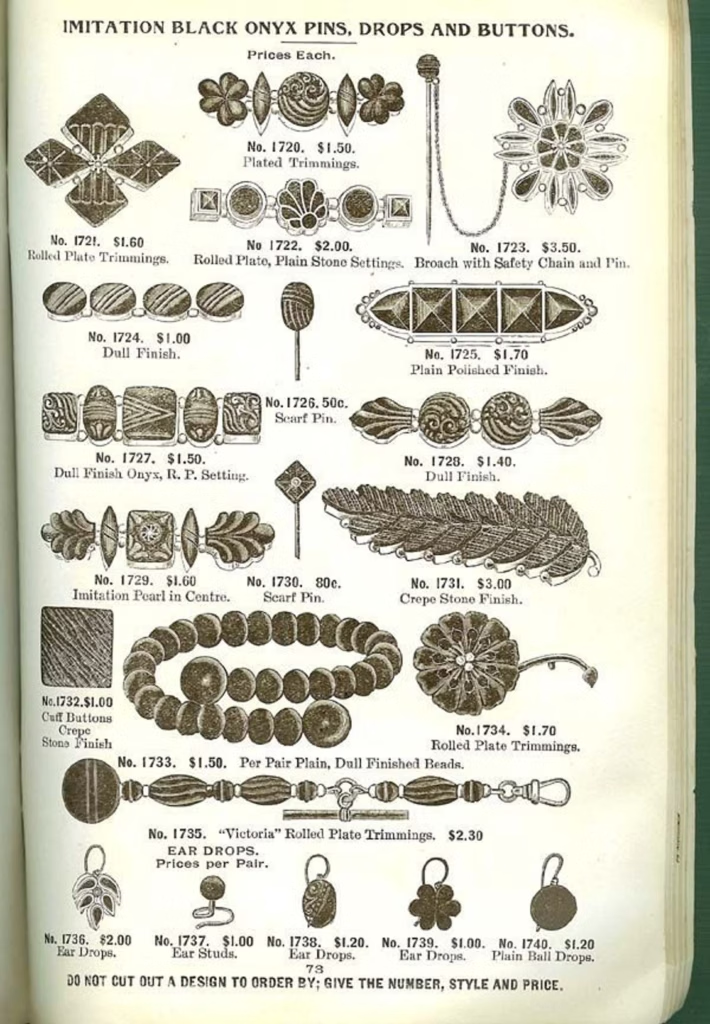
For bargain hunters, who couldn’t afford jet.
For Half Mourning for the last six months of it, you could finally wear some muted colors, like grey, white, or lavender.
As for Widowers, black suits or just a simple black armband for about three months to a year. Unless of course they jumped in and got married right away, which many did. Can’t have your household fall apart without a mistress of the house!
In the home, all clocks were stopped at the moment of the loved one’s death. Mirrors, portraits, and other shiny wall décor were covered with black crepe…so the soul wouldn’t get trapped and call out to others. (The idea of covering mirrors is an old Jewish custom so that the mourners wouldn’t have to see their own faces in mourning. The Vics just gave it their own twist.)
It was not the practice to have loved ones viewed at a funeral parlor. They had their wake at home, called a parlor wake, taking over a parlor or drawing room, in their uncovered coffins or caskets for visitors to pay their respects. The place was usually covered in flowers to help hide the smell as the body began to decompose. But it was also a lovely custom.
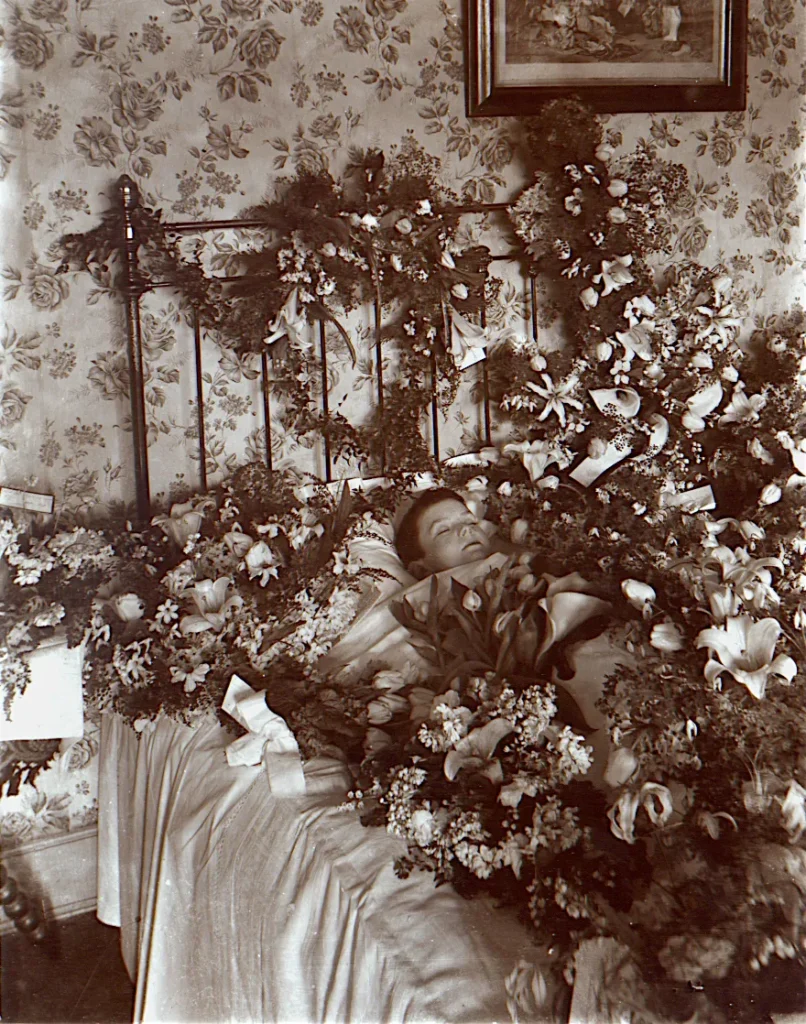
This is not in the parlor but in the child’s bedroom.
And, of course, a front door wreath of black crepe (those crepe makers were definitely in the money!) or just a simple black ribbon to let neighbors know the house was in mourning.
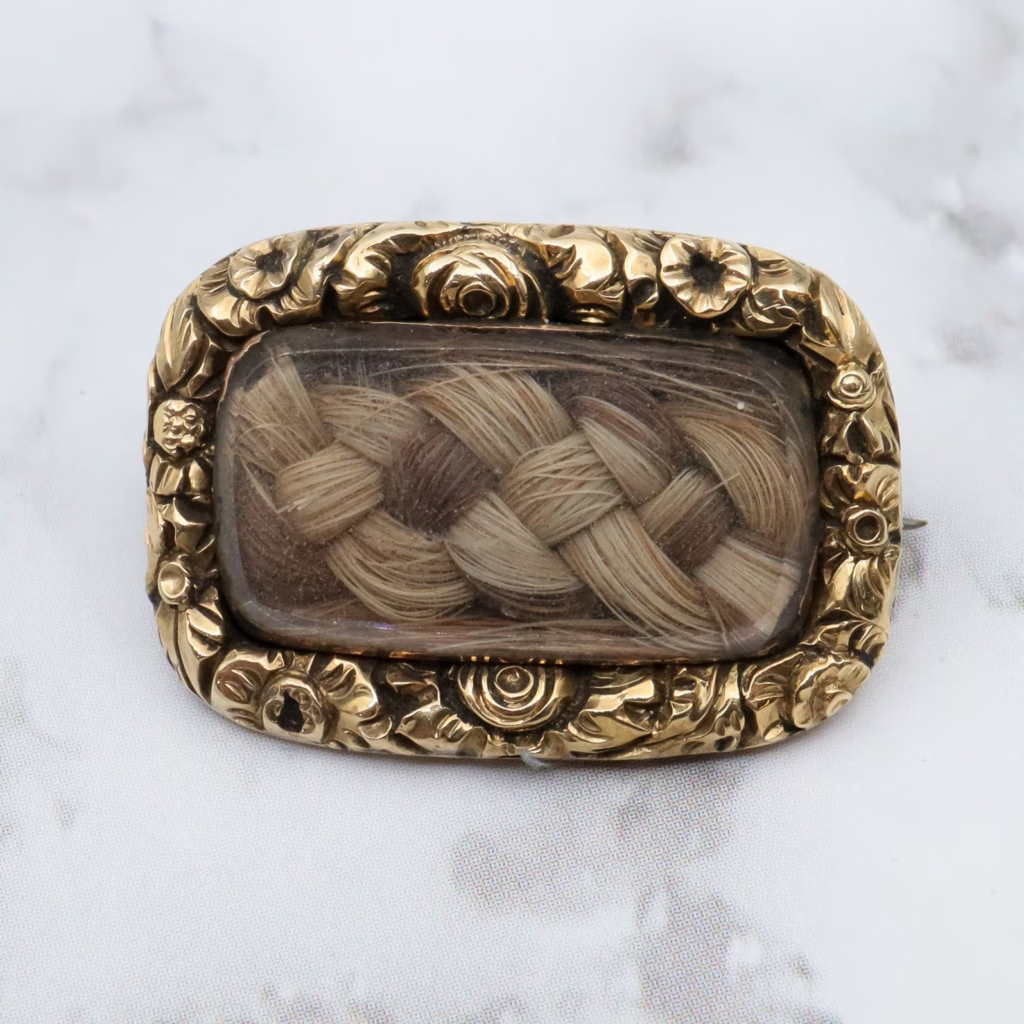
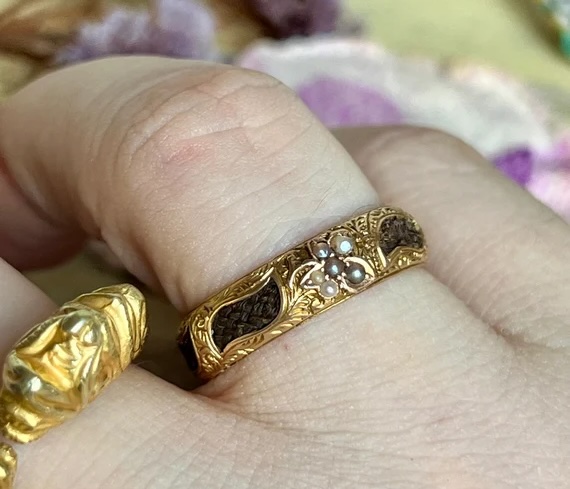
Mourning jewelry did not only consist of jet necklaces, earrings, and rings, but of rings, lockets, and brooches made of the deceased’s hair, intricately woven. The Vics also made elaborate framed décor to display on their walls of woven hair, but not for funereal reasons.
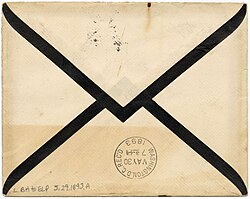
Any form of letters and invitations during this time were edged in black, the paper and the envelope, and sealed with black wax. You could see how these practices would be beyond the means of a poorer family.
And the creepiest of all, the practice of the Post Mortem photography. That’s just what it sounds like, having a photographer come to your home to take a photograph of your dead loved ones, either set up with the family as if they were still alive, or in their coffins (a note here: Coffin and Casket are not interchangeable terms. A casket is that fancy four-sided box with handles. A coffin is in the shape of a person and is six-sided, the kind you’d see a newly shot gunslinger in in the old west.) Now, sometimes it’s hard to tell if that’s what it is, but I think that these are all of dead family members.
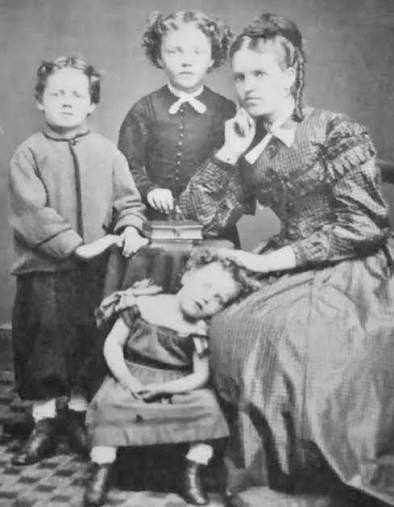
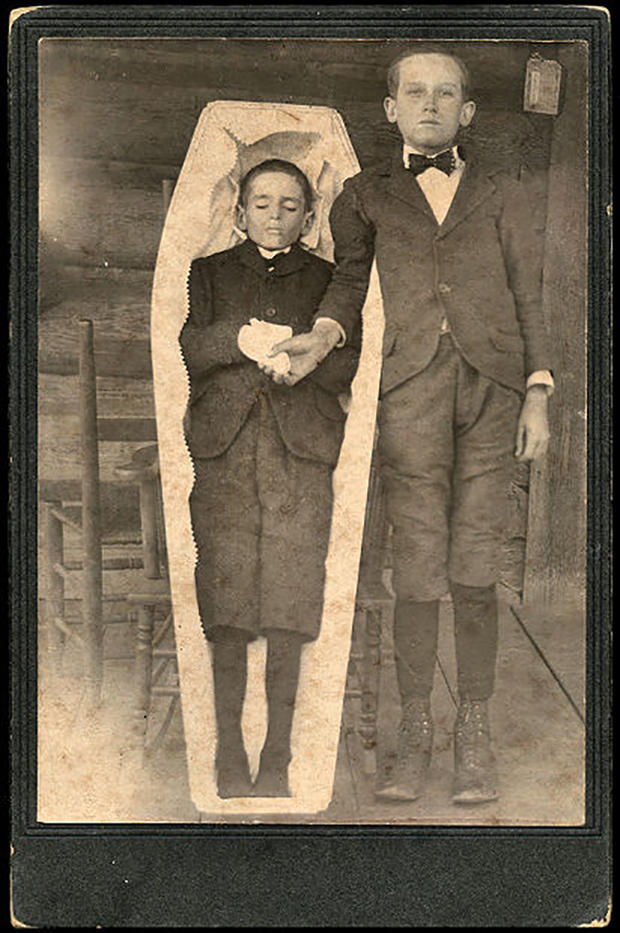
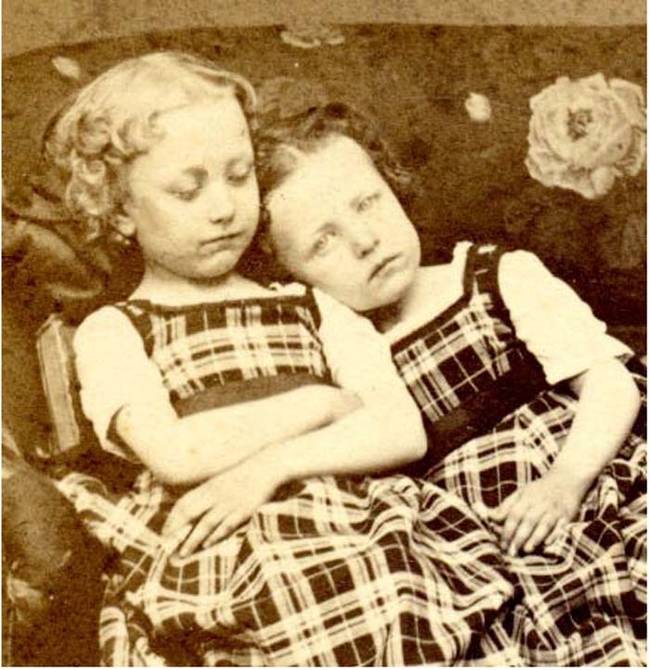
Sometimes, in the case of children, they would leave the eyes open, or for adults they might paint their open eyes on their eyelids. It is a momento mori, a reminder that you too will die. But also a way to memorialize your lost loved ones.
And finally, this was the period where seances found their footing. It started in the States after the Civil War, where relatives tried to talk to their dead sons, fathers, husbands, beloved uncles just one more time. It travelled across the Pond to England where the questionable practice easily took hold, what with all the other funereal practices that made them ripe for the picking. Mediums might have had good intentions – like Sir Arthur Conan Doyle’s second wife, Jean Elizabeth Leckie, pictured below – but many were just in it for the money.
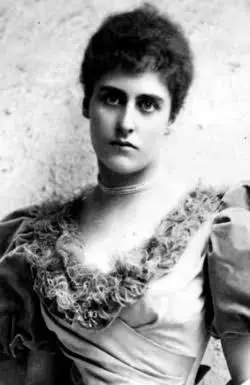
The second Lady Doyle
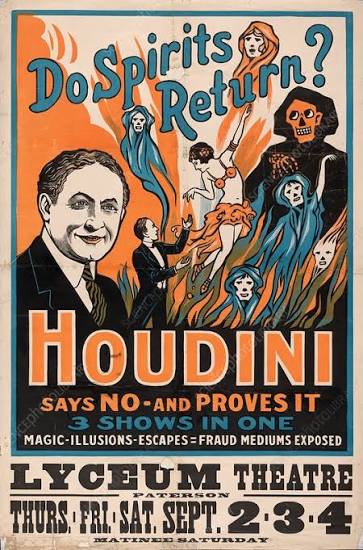
And this is why later, in the Edwardian period, Houdini started debunking mediums, because he knew they used the same trickery as magicians. In fact, Doyle and Houdini paled around until Doyle’s wife went a little too far in her automatic writing supposedly as a message from Houdini’s beloved deceased mother who, in the message, addressed her son as “Harry” when his real name was Eric, who wrote it in English when she was Hungarian and didn’t speak much English, and then signed off with a cross when they were Jewish. Needless to say, after that they barely spoke to one another again.
Discover more from Jeri Westerson
Subscribe to get the latest posts sent to your email.