
If you, like me, love antiques, then you probably watch, like me, several shows about them; the British Antiques Roadshow, the British Celebrity Antiques Roadtrip (a competition show where two celebrity guests have 400 pounds to spend each on antiques they buy to bring to auction and the one who makes the most–or loses the least–wins. The money won goes to charity), and the American version of Antiques Roadshow on PBS. Invariably, at least in the British shows, you will see those damned ceramic spaniels.
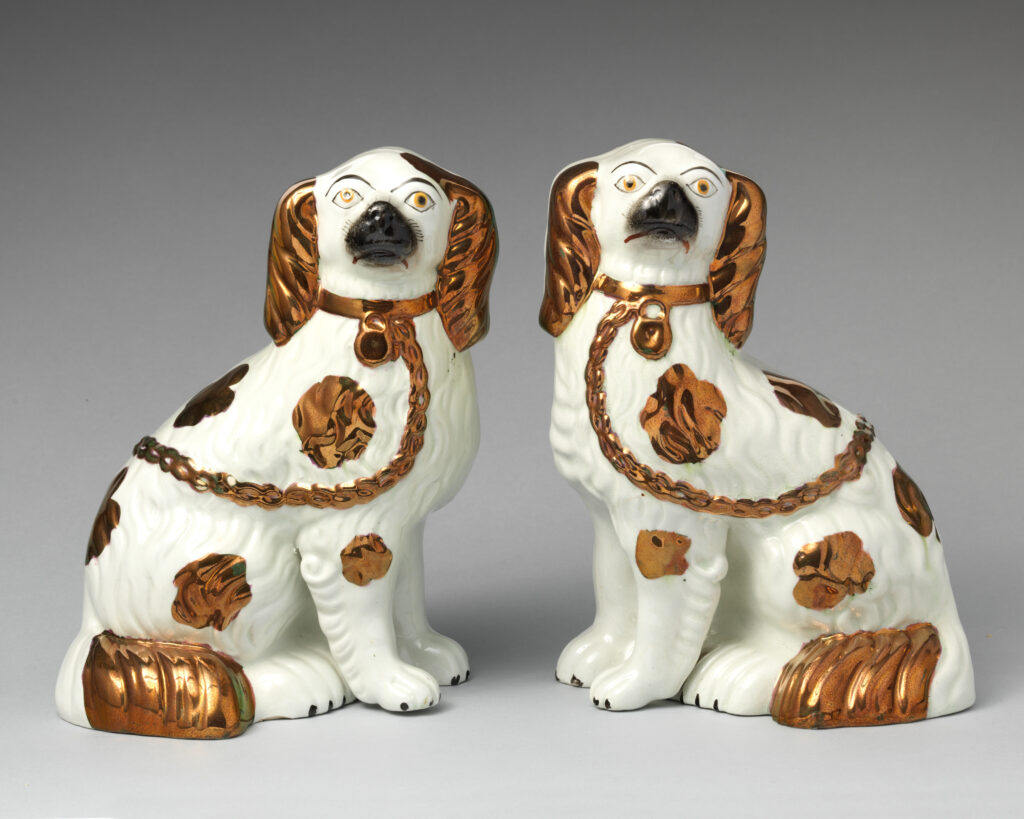
They are absolutely everywhere. Their weird eyes with eyebrows! Funny little pottery dogs. Watching the Celebrity Antiques Roadshow, you will see them in the background, in the foreground, or a celebrity shopper is looking at them. They are utterly ubiquitous, at least in England.
But what exactly are they?
They are, officially, Staffordshire dog figurines, made of pottery, and in Victorian times, you would absolutely have bought them to put on top of your fireplace mantels in your sitting rooms. Staffordshire produced other dog figurines, including greyhounds which were also popular, but nothing, and I mean nothing was as popular as these King Charles Spaniels by the pair.
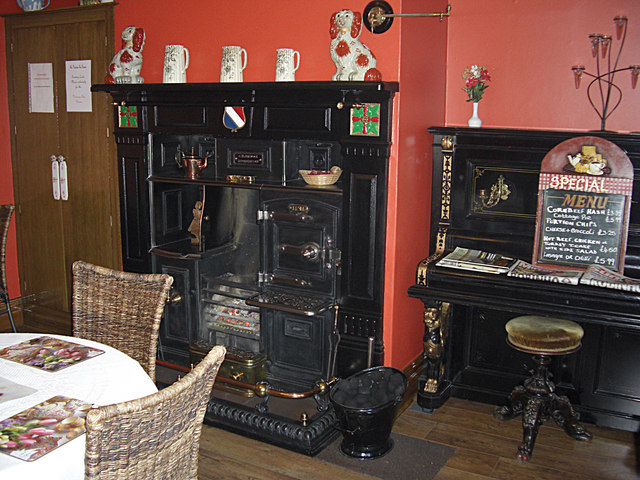
In the pottery factories in Staffordshire, they have been making these dog figurines since the 1720s. When they made something popular in Great Britain, they made ’em a loooong time. And they were great…for a while. As the 19th century drew on and their popularity increased, the quality, naturally, diminished. Good ole capitalism! Apparently, you could still get decent ones towards the end of the 1920s. With the growing interest in antiques today, some pottery factories even started making them again into 2009 (so buyer beware!)
And by the way, remember that children worked in factories then. According to the London Independent from an article from May 1996 entitled “Old Pottery Makes Fine Figures”, “Children as young as seven or eight years were paid two shillings a week to paint the gold chains often included on the spaniels in the 1800s.” Nice.
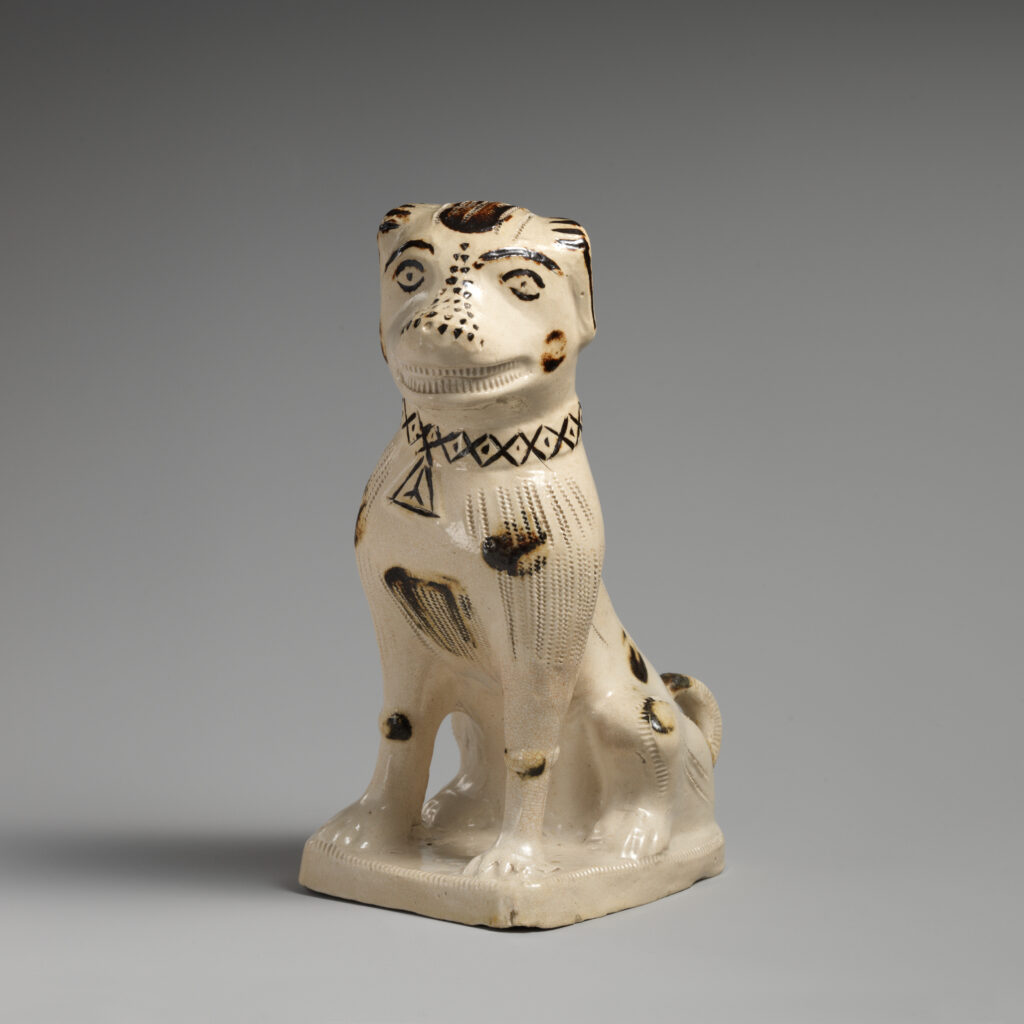
Here’s a very early pottery dog from 1745. Looks a bit naive:
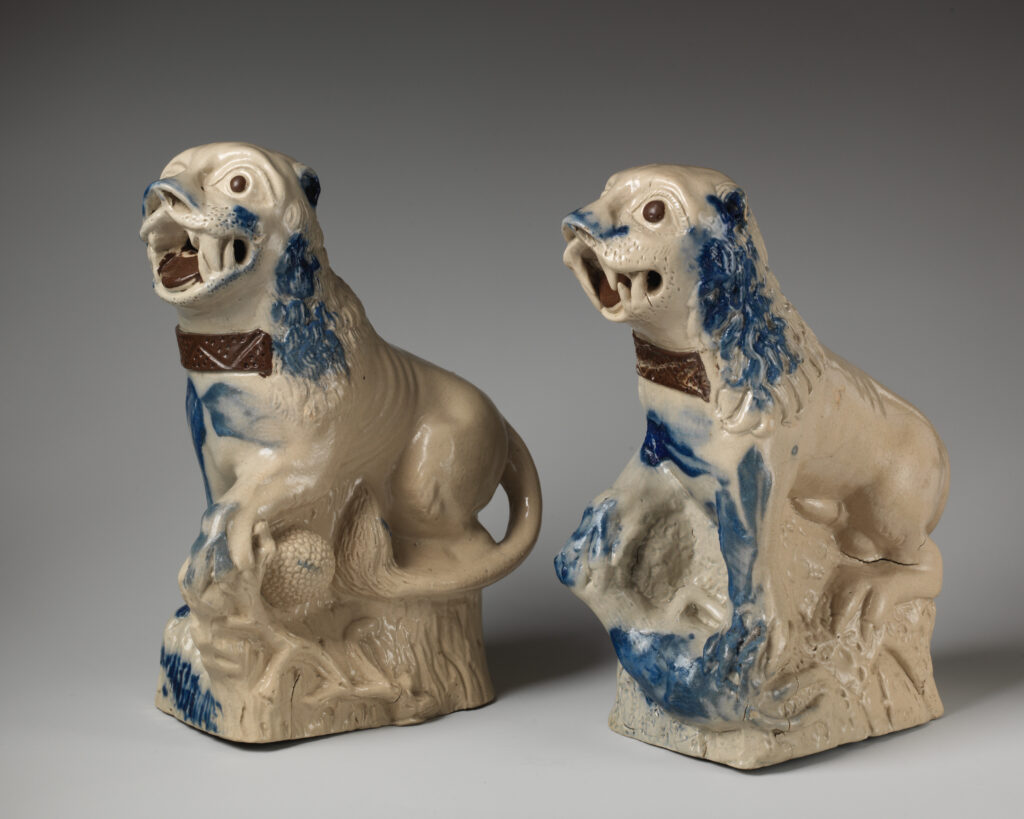
And here’s another pair from 1750 copying Chinese dog figurines. They do look a little fierce, and more like lions:
Here’s one from 1860 that looks a bit more like a surprised sheep than a dog:
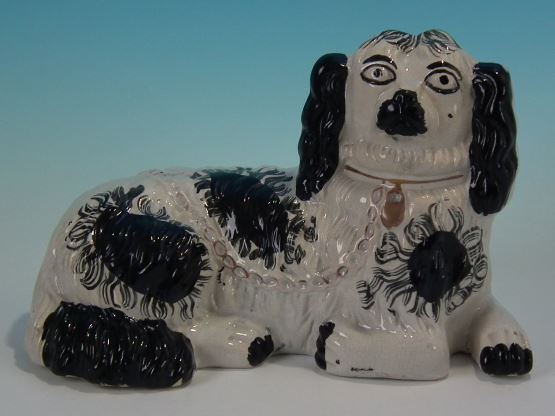
A proud pup made before 1923. This was about near the end of their manufacture. They were a bit too outdated by the roaring twenties when skirts came up, and inhibitions went down.
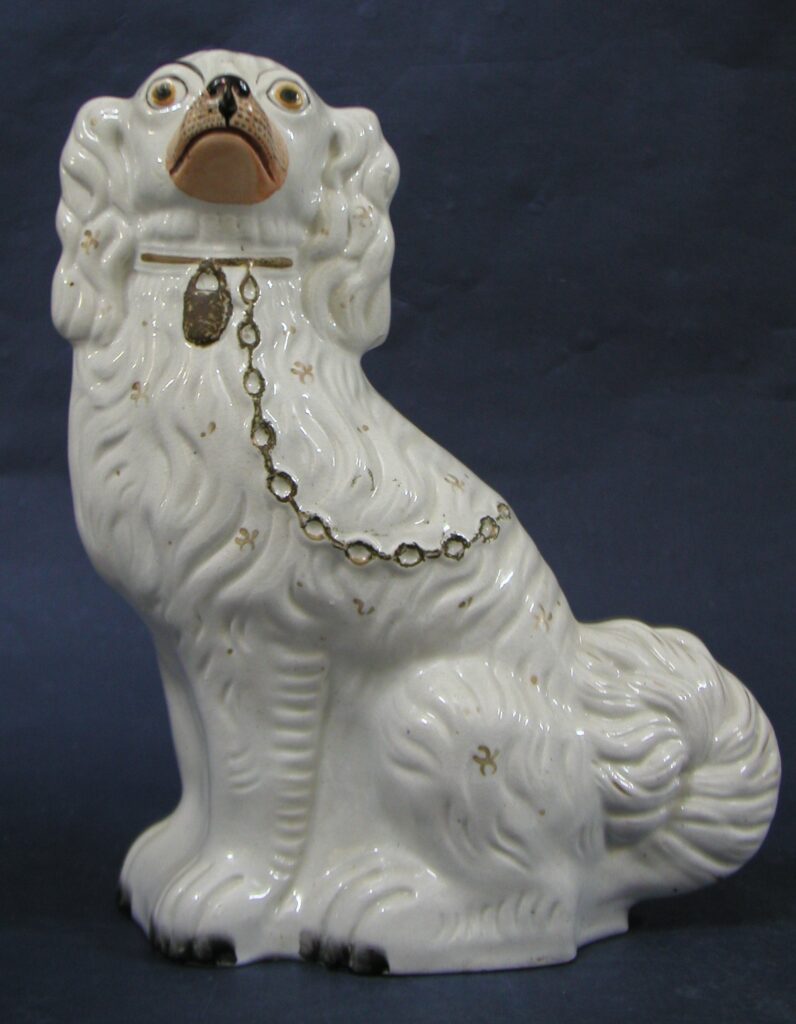
There is also a Victorian tale told about them as a useful code: Placing the Staffordshire spaniel figurines on window sills. “One story is that a woman could place the ornaments in her front window; if the spaniels were turned back to back, it meant her husband was at home. If he was away or at sea, the dogs would be placed facing each other. When her lover passed the house, he would then know by the way the dogs were facing, whether it was safe for him to visit her without her husband knowing.”
And doggone it, I have even seen them in America while antiquing. Do I like them? Hard to say. It’s always fun finding them either on TV or in the wild. You certainly cannot have a Victorian story without their presence.
If you hit the antique stores in England, you will be dogged by these fellows in every shop you go to, guaranteed.
Whether you call them Hearth Spaniels or Fireplace Dogs, Staffordshire Dog Figurines, or Wally Dugs (if you are from Scotland) they will wait, very patiently on your hearth, on top of your mantel, or in your window for their master to come home. Without ever blinking those wide, staring eyes.
Discover more from Jeri Westerson
Subscribe to get the latest posts sent to your email.
The Victorian story makes them seem quite risqué! I’ve seen modern copies that are realistic looking but I like the original Victorian style that look like a child drew their faces.
Yes, isn’t that interesting about their faces. With eyebrows. Just saw a marvelous realistic dog true to size ceramic from the early 1900s on the British Antiques roadshow from Germany. So they COULD have done them more realistically but chose to mass market these.